How to Start an Online Grocery Delivery Business in India: The Complete Guide for 2026

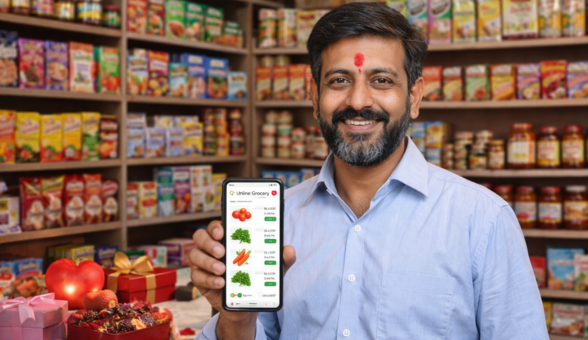
India’s grocery market is one of the largest in the world, worth over $600 billion, and yet the vast majority of grocery transactions still happen at neighbourhood kirana stores and local supermarkets. That is changing rapidly. The pandemic permanently shifted consumer behaviour, and even in 2026, the demand for online grocery ordering and home delivery continues to climb in cities, towns, and semi-urban areas alike.
For grocery store owners, supermarket operators, and aspiring entrepreneurs, this shift represents a once-in-a-generation opportunity. The question is no longer whether customers will buy groceries online. They already are. The real question is whether your business will be the one serving them or whether you will watch that revenue flow to larger platforms that take hefty commissions and own your customer relationships.
This guide is built for action. It covers everything from choosing the right business model and technology platform to setting up your product catalog, managing deliveries, handling perishable inventory, navigating legal requirements, and marketing your store for long-term growth. Whether you are a kirana shop owner in a Tier 2 city or a new entrepreneur planning a cloud kitchen and grocery hybrid, every strategy here is designed to work with Indian market realities and tools like Boomimart that are purpose-built for Indian small businesses.
Why Online Grocery Is a Massive Opportunity in India Right Now
The Indian online grocery segment has been growing at roughly 25% to 30% year over year. Quick commerce platforms like Blinkit, Zepto, and Swiggy Instamart have trained millions of consumers to expect groceries at their doorstep within minutes. But here is what most people miss: these platforms are not profitable for the majority of sellers who list on them. The commissions, the pricing pressure, and the complete lack of customer data make marketplace selling a losing proposition for small and mid-sized grocery businesses in the long run.
Meanwhile, customers are increasingly looking for trusted, local alternatives. They want the convenience of online ordering combined with the trust and familiarity of their neighbourhood store. A homemaker in Coimbatore who has been buying her monthly supplies from the same shop for a decade would love to place that order from her phone instead of making a trip, as long as she knows the store, trusts the quality, and gets reliable delivery.
This is exactly where your opportunity lies. By launching your own online grocery store, you retain full control over your brand, your pricing, your customer relationships, and your profit margins. And with modern e-commerce ERP platforms, setting this up is neither expensive nor technically complex.
Choosing the Right Business Model: Marketplace vs. Own Store vs. Hybrid
Before investing in technology or marketing, you need to decide how you want to sell. The three primary models for online grocery in India are: listing on existing marketplaces, building your own branded online store, or running a combination of both. Each model has distinct advantages and trade-offs. Here is a detailed comparison:
| Factor | Marketplace Model (Swiggy Instamart, Blinkit) | Own Online Store (with Boomimart) | Hybrid (Own Store + Marketplace) |
| Brand Ownership | You are a supplier, not a brand | Complete brand identity and control | Brand on your store, supplier on marketplace |
| Customer Data Access | Platform owns the data | You own every customer detail | Partial (own store data is yours) |
| Commission Fees | 15% to 35% per order | Zero commission, flat subscription only | Commission on marketplace, none on own store |
| Profit Margins | Squeezed by commissions and discounts | Full margins retained | Blended margins |
| Delivery Control | Platform manages delivery | You choose your delivery partners | Mixed control |
| Pricing Freedom | Platform may dictate or cap pricing | Full pricing flexibility | Different pricing per channel |
| Scalability | Limited by platform algorithms | Scale with your own marketing efforts | Best reach across channels |
| Dependence Risk | High (deplatforming, policy changes) | Zero dependence on third parties | Reduced risk through diversification |
For most grocery business owners, the smartest path is to start with your own online store to build your brand and capture customer data, then selectively list on marketplaces for additional volume. The key is making sure your own store is not just a secondary afterthought but a well-designed, fully functional shopping experience. That is where choosing the right platform matters enormously.
To understand why businesses are moving from B2B2C to D2C sales models, read our in-depth analysis of the D2C shift reshaping Indian e-commerce.
Build Your Store Today!
Selecting the Right E-commerce Platform for Your Grocery Business
Your e-commerce platform is the backbone of your entire online operation. It determines how your store looks, how orders are processed, how inventory is managed, and how customers experience your brand. For an Indian grocery business, you need a platform that understands local payment methods, supports regional languages in the future, handles perishable inventory nuances, and comes with mobile apps that Indian consumers expect.
Here is how the most relevant platforms compare for grocery businesses in India:
| Feature | Boomimart | Shopify | WooCommerce | Dukaan |
| Indian Payment Gateways | Built-in (Razorpay, PayU, PhonePe) | Limited native, plugins needed | Plugin dependent | Built-in (basic) |
| Customer Mobile App | Yes (Android + iOS included) | No (third-party apps needed) | No | Yes (basic) |
| Admin Mobile App | Yes | Yes | No | Yes |
| Inventory Management | Advanced ERP-grade system | Basic (apps for advanced) | Plugin dependent | Basic |
| Multi-store Management | Yes, built-in | Requires Shopify Plus | Multisite setup (complex) | No |
| Vendor Management | Yes | Via third-party apps | Via plugins | No |
| WhatsApp Integration | Native integration | Via apps | Via plugins | Basic |
| POS for Offline Sales | Yes, built-in | Separate Shopify POS plan | Via plugins | No |
| GST and Tax Compliance | Indian GST built-in | Needs configuration | Plugin dependent | Basic |
| Pricing Model | Flat subscription, zero commission | Monthly + transaction fees | Free core, paid hosting + plugins | Subscription based |
| Best For | Indian grocery and D2C businesses | Global brands, bigger budgets | Developers wanting full control | Simple single-product stores |
Boomimart stands out for Indian grocery businesses because it was designed from the ground up for the Indian market. You get a complete ecosystem: a responsive web store, customer-facing mobile apps for both Android and iOS, an admin dashboard accessible from your phone, built-in inventory management that works at ERP level, native WhatsApp integration for order updates, and Indian payment gateways already wired in. There is no plugin hunting, no developer dependency, and no surprise transaction fees eating into your already thin grocery margins.
For a deeper side-by-side analysis, explore our detailed comparisons: Shopify vs Boomimart, WooCommerce vs Boomimart, Dukaan vs Boomimart, Magento vs Boomimart, and BigCommerce vs Boomimart. Check Boomimart pricing plans to find the right fit for your budget.
Step-by-Step: Setting Up Your Online Grocery Store
Step 1: Register Your Business and Get Necessary Licenses
Before you go live, make sure the legal foundations are in place. For an online grocery business in India, the essential registrations and licenses include:
- FSSAI License: Mandatory for anyone selling food products. Basic registration works for small businesses with turnover under Rs 12 lakh per year. State licenses are required for larger operations.
- GST Registration: Required once your annual turnover crosses Rs 40 lakh (Rs 20 lakh for special category states). Even if you are below the threshold, voluntary registration can help with input tax credit and credibility.
- Shop and Establishment Act License: A basic local registration required for operating any commercial establishment.
- Trade License: Issued by your local municipal body. Requirements vary by state and city.
- Current Bank Account: Open a separate business bank account for clean financial management and payment gateway integration.
Step 2: Set Up Your Store on Boomimart
Once your legal paperwork is in order, setting up your online store is surprisingly fast with the right platform. With Boomimart, the process typically looks like this:
- Sign up and choose your plan. Visit Boomimart’s pricing page and pick the plan that matches your current scale. You can always upgrade as your order volume grows.
- Configure your store basics. Set up your store name, logo, business address, delivery zones, and operating hours through the admin panel.
- Connect your payment gateway. Integrate Razorpay, PayU, or your preferred payment provider. Boomimart supports UPI, net banking, cards, wallets, and COD out of the box. For a comprehensive look at options, read our guide on top Indian payment gateway providers.
- Add products and categories. Upload your product catalog with images, descriptions, weights, prices, and variants. Organize everything into intuitive categories.
- Set up delivery logistics. Define your delivery zones, time slots, delivery charges, and minimum order values.
- Go live. Your web store and customer mobile app are ready. Share the links with your existing customer base and start taking orders.
The entire setup can be completed in a day or two. Request a demo to see the platform in action before committing.
Step 3: Build a Product Catalog That Customers Love to Browse
Your product catalog is the heart of your online grocery store. Unlike a physical shop where customers can see, touch, and pick items themselves, your online catalog must do all the heavy lifting of product discovery and trust-building through images, descriptions, and organization.
Here are the principles that make a grocery catalog work well online:
- Use clear, high-quality product images. Photograph each product against a clean background. Show labels, weight markings, and expiry dates where relevant. Customers buying groceries online want to see exactly what they are getting.
- Write descriptions that answer buying questions. Include weight, quantity, brand name, shelf life, storage instructions, and any certifications (organic, FSSAI-approved). For staples like rice or dal, mention the grain type, source region, and cooking characteristics.
- Organize categories logically. Structure your store the way a customer would mentally navigate a grocery shop: Fruits and Vegetables, Dairy and Eggs, Staples and Grains, Snacks and Beverages, Cooking Essentials, Personal Care, and so on.
- Highlight variants and pack sizes. Offer 500g, 1kg, and 5kg options for staples. Show per-unit pricing for transparent value comparison.
- Feature seasonal and regional specialties. If you stock local products like cold-pressed oils, millet varieties, or regional snacks, give them prominent placement. These items differentiate you from generic marketplaces.
For detailed guidance on making your product pages convert browsers into buyers, explore our article on design and development techniques to improve your product page. And for structuring your categories effectively, our step-by-step guide to creating e-commerce category pages that work is an excellent resource.
Build Your Store Today!
Inventory Management: The Backbone of Online Grocery
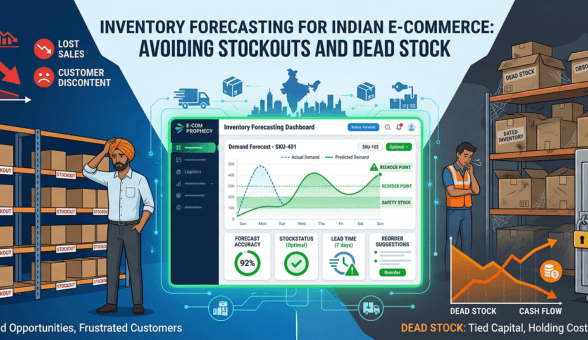
Grocery inventory is uniquely challenging. You are dealing with perishable items that have varying shelf lives, products that sell in different units (kg, litres, pieces, bundles), and demand that fluctuates based on seasons, festivals, and even day of the week. Get inventory management wrong, and you face either stockouts that frustrate customers or wastage that destroys your margins.
Here is how to manage grocery inventory effectively for your online store:
- Separate perishables from shelf-stable items in your system. Track expiry dates for dairy, bakery, and fresh produce. Set up automated alerts when items are approaching their sell-by date so you can run flash discounts rather than waste stock.
- Maintain accurate real-time stock levels. Nothing damages customer trust faster than placing an order only to receive a ‘sorry, this item is out of stock’ message. Boomimart’s ERP-grade inventory system syncs your stock across your physical shop, web store, and mobile app in real time.
- Use reorder points and minimum stock alerts. For your fastest-moving items (cooking oil, rice, milk, bread), set automatic low-stock notifications so you never run out during peak demand periods.
- Track supplier performance. Keep records of which vendors deliver on time, which ones have quality issues, and what lead times to expect. Boomimart’s vendor management module helps you maintain these relationships systematically.
- Analyze sales patterns. Weekly purchase patterns in grocery are remarkably predictable. Saturday and Sunday orders tend to be higher. Month-end budgets affect buying behaviour. Festival weeks create demand spikes for specific items. Use your admin panel data to forecast and prepare.
For a broader perspective on managing costs while implementing technology like this, read our guide on ERP implementation cost reduction strategies. And to understand how a well-designed admin panel can streamline your daily operations, explore how to boost online e-commerce sales with your admin panel.
Delivery and Logistics: Getting Groceries to Doorsteps Reliably
In the grocery business, delivery is not a supporting function. It is the core product experience. A customer ordering fresh vegetables expects them to arrive looking exactly like what they saw on your website, not wilted, not damaged, and certainly not late. Here is how to build a delivery operation that keeps customers coming back.
Choosing the Right Delivery Model
| Delivery Partner Type | Examples | Best For | Typical Cost |
| Hyperlocal Platforms | Dunzo, Porter, Borzo | Same-day delivery within city (1 to 15 km) | Rs 30 to Rs 80 per order |
| National Couriers | Delhivery, Ecom Express, DTDC | Non-perishable grocery items, pan-India reach | Rs 50 to Rs 120 per order |
| In-house Riders | Own delivery staff on bikes | High-volume stores with predictable delivery zones | Fixed salary + fuel costs |
| India Post | Speed Post, Business Parcel | Budget-friendly for non-urgent, shelf-stable items | Rs 25 to Rs 60 per order |
For most grocery stores starting out, a combination of hyperlocal delivery partners for quick same-day orders and in-house riders for your core delivery zone gives you the best balance of speed, cost, and reliability. As you scale, you can bring more delivery capacity in-house.
Delivery Best Practices for Grocery
- Offer time-slot based delivery. Let customers choose morning, afternoon, or evening delivery. This reduces missed deliveries and improves satisfaction.
- Use appropriate packaging for perishables. Insulated bags for dairy and frozen items, ventilated containers for fruits and vegetables, and sturdy boxes for glass bottles and fragile items.
- Set a minimum order value. Delivery costs eat into already thin grocery margins. A minimum order of Rs 200 to Rs 500 ensures each delivery is economically viable.
- Provide live order tracking. Automated WhatsApp or SMS updates at each stage (order confirmed, packed, out for delivery, delivered) reduce customer anxiety and support calls.
- Handle substitutions gracefully. If an ordered item is out of stock, contact the customer before dispatch to offer alternatives. Never substitute without asking.
For more advanced shipping strategies, our guide on shipping management hacks for SMBs in India covers everything from negotiating courier rates to reducing return-to-origin shipments.
Payment Setup: Making Checkout Smooth and Trustworthy
Indian grocery customers have strong payment preferences, and those preferences vary by region and demographic. Your checkout must accommodate all of them seamlessly. Here is what your payment setup should include:
- UPI (PhonePe, Google Pay, Paytm): The dominant payment method for most Indian online transactions. Fast, familiar, and zero hassle for customers.
- Debit and Credit Cards: Essential for higher-value orders and customers who prefer card payments.
- Net Banking: Important for customers who prefer direct bank transfers, especially for bulk or B2B orders.
- Cash on Delivery (COD): Still critical for first-time online buyers and customers in semi-urban areas. However, too much COD increases operational complexity and RTO (return to origin) risk.
- Wallets: Amazon Pay, Freecharge, and other digital wallets add convenience for tech-savvy shoppers.
The goal is to make checkout frictionless. Every extra click, every confusing field, every slow-loading page costs you a sale. Boomimart’s checkout flow is designed to be fast, clean, and mobile-optimized, because the majority of grocery orders in India happen on smartphones.
Read our comprehensive guide on mastering e-commerce checkout design for actionable tips. And to encourage more prepaid orders (which are better for your cash flow), explore our strategies for enhancing prepaid orders and reducing COD complexity.
Understanding Your Startup Costs
One of the biggest advantages of starting an online grocery business with a platform like Boomimart is that the upfront investment is a fraction of what it costs to open a new physical store. Here is a realistic cost breakdown:
| Expense Category | Estimated Monthly Cost | Notes |
| E-commerce Platform (Boomimart) | Rs 2,000 to Rs 10,000 | Depends on plan; includes web store, app, admin panel |
| Domain and Hosting | Rs 500 to Rs 2,000 | Custom domain for brand credibility |
| Product Photography | Rs 2,000 to Rs 5,000 (one-time) | DIY with smartphone or hire for initial catalog shoot |
| Packaging Materials | Rs 3,000 to Rs 8,000 | Paper bags, boxes, insulated bags for perishables |
| Delivery (outsourced) | Rs 30 to Rs 80 per order | Hyperlocal delivery partners |
| Digital Marketing | Rs 5,000 to Rs 20,000 | Google Ads, Facebook, Instagram, WhatsApp campaigns |
| FSSAI License | Rs 100 to Rs 5,000 (annual) | Mandatory for selling food products online |
| GST Registration | Free | Mandatory once turnover crosses Rs 40 lakh threshold |
| Miscellaneous | Rs 2,000 to Rs 5,000 | Accounting software, packaging design, contingency |
In total, you can launch a professional online grocery store for roughly Rs 15,000 to Rs 50,000, depending on your scale and marketing ambitions. Compare that to the Rs 5 to Rs 15 lakh it costs to set up even a small physical grocery store, and the economics are compelling.
Build Your Store Today!
Marketing Your Online Grocery Store for Sustainable Growth
1. Start with Your Existing Customer Base
If you already run a physical grocery store, your most valuable marketing asset is your existing customers. Print your online store link and QR code on every bill, shopping bag, and delivery receipt. Train your counter staff to mention the app. Offer a first-order discount exclusively for online purchases. These customers already trust you. You just need to give them a reason to try your digital channel.
2. Local SEO and Google Business Profile
Claim and optimize your Google Business Profile with accurate store details, operating hours, delivery information, and a link to your online store. When someone searches ‘grocery delivery near me’ in your area, you want your store to appear. Add product schema markup to your website so Google can display rich product information directly in search results. Our guide on essential schema markup for e-commerce websites shows you exactly how to set this up.
3. WhatsApp Marketing
In the grocery business, WhatsApp is not just a communication tool. It is a sales channel. Create broadcast lists segmented by customer type (weekly shoppers, monthly bulk buyers, organic product enthusiasts), send weekly specials and new arrival updates, and make it easy for customers to place orders or reorder their regular items directly via WhatsApp.
Boomimart’s native WhatsApp integration means order confirmations, dispatch alerts, and delivery updates all flow through WhatsApp automatically, creating a buying experience that feels personal and immediate.
4. Social Media Content That Drives Orders
Grocery might not seem like the most Instagram-worthy category, but creative content can make a real difference. Post recipe videos featuring products from your store. Share behind-the-scenes content of fresh produce arrivals. Run ‘Deal of the Day’ posts highlighting limited-time offers. Use Facebook Groups for your locality to build a community around your store.
5. Referral and Loyalty Programs
Grocery shopping is habitual. Once a customer starts ordering from your store and has a good experience, they are likely to come back week after week. Amplify this with a referral program (‘Invite a friend, both get Rs 100 off’) and a simple loyalty system (earn points on every order, redeem for discounts). Boomimart’s CRM tools let you set these up without any additional software.
For a complete playbook on driving visitors to your online store without spending heavily on ads, read our guide on e-commerce traffic management strategies. And if you are interested in exploring how AI-powered chatbots can handle common customer queries and free up your team’s time, check out our AI chatbot comparison for customer support.
Homepage and Store Optimization Tips
Your online store’s homepage is the digital equivalent of your shop’s entrance. It needs to communicate three things instantly: what you sell, why you are trustworthy, and how customers can start shopping right now. Feature your most popular categories front and center, display current offers and deals prominently, add trust signals like FSSAI certification badges, customer review counts, and delivery guarantees, and make your search bar large and easy to find, because grocery shoppers often know exactly what they want.
For detailed optimization strategies, our homepage optimization tips for e-commerce businesses guide is packed with actionable advice.
Tracking Performance and Making Data-Driven Decisions
Running an online grocery store gives you access to data that a physical shop simply cannot provide. Every product view, every cart addition, every abandoned checkout, every completed purchase is a data point that tells you something about your business and your customers.
The metrics that matter most for an online grocery business include:
- Average Order Value (AOV): Are customers buying enough per order to make delivery profitable? If AOV is too low, consider bundling deals or increasing minimum order thresholds.
- Repeat Purchase Rate: Grocery is a repeat purchase category. If customers are not coming back within 2 to 4 weeks, something is wrong with the experience.
- Cart Abandonment Rate: If shoppers are adding items but not completing checkout, investigate whether the issue is pricing surprises, delivery charges, or checkout friction.
- Top-Selling Products: Know your bestsellers by revenue and by volume. Use this data to negotiate better supplier terms and ensure these items are always in stock.
- Delivery Success Rate: Track successful first-attempt deliveries versus failed or rescheduled ones. A low success rate signals delivery partner issues or inaccurate customer addresses.
Setting up proper tracking from day one is critical. Our guide on data layer tracking mastery for e-commerce explains every event you should be capturing and how to turn that data into growth decisions.
Scaling Your Online Grocery Business
Once your online grocery store is running smoothly and generating consistent orders, it is time to think about scaling. Here are the growth levers that work best for grocery e-commerce in India:
- Expand your delivery radius gradually. Start with a 5 km radius, prove the model, then expand to 10 km, 15 km, and eventually multiple zones with dedicated riders for each.
- Add complementary product categories. Beyond core groceries, add household cleaning supplies, personal care items, pet supplies, baby products, and kitchen essentials. These increase basket size and reduce per-order delivery costs.
- Launch subscription and repeat order features. For staples like milk, bread, eggs, and cooking oil, offer subscription options where customers can set a recurring delivery schedule. This creates predictable revenue and improves inventory planning.
- Explore B2B and bulk orders. Restaurants, hostels, PG accommodations, corporate cafeterias, and catering services in your area all need regular grocery supplies. They order in bulk and on a predictable schedule, which is excellent for your business.
- Consider multi-store expansion. If you operate grocery stores in multiple locations, Boomimart’s multi-store management feature lets you manage all of them from a single admin dashboard, with separate inventory, pricing, and delivery zones for each location.
For broader business growth inspiration, explore our article on the best ideas to become a digital entrepreneur and learn how small businesses can thrive in the e-commerce revolution.
Common Mistakes to Avoid
- Launching without testing your delivery operation. Run at least 20 to 30 test orders with friends and family before going public. Iron out packing, routing, and communication issues before real customers encounter them.
- Ignoring product image quality. Blurry, poorly lit grocery photos destroy trust. Invest a day in proper product photography.
- Setting unrealistic delivery promises. Do not promise 30-minute delivery if you cannot sustain it. Reliable 2 to 4 hour delivery is far better than inconsistent 30-minute claims.
- Neglecting your physical store for the online one. Your physical store and online store should complement each other, not compete. Many of your best online customers will be existing physical store customers who simply want the convenience of digital ordering.
- Not collecting customer feedback early. Send a simple WhatsApp message after every order asking about the experience. This feedback is gold for improving your service before small issues become big problems.
Your Next Step: Get Started Today
The online grocery opportunity in India is massive, growing, and still wide open for local businesses willing to make the leap. You do not need venture capital funding or a team of developers. You need a reliable platform, a well-organized product catalog, a solid delivery operation, and the willingness to serve your customers in the way they increasingly prefer: from the convenience of their phones.
Boomimart gives you everything you need to make this happen: a professional web store, customer mobile apps, an ERP-grade admin panel, inventory management, CRM, payment integration, shipping management, and more. All built specifically for Indian small businesses, all available at a fraction of what traditional e-commerce setups cost.
Request a free demo and take the first step towards building an online grocery business that serves your community and grows your revenue for years to come.