
How to Sell Organic and Natural Beauty Products Online in India

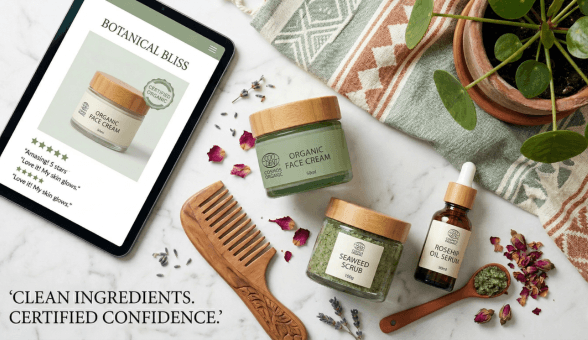
The Indian clean beauty market reached approximately INR 7,786 crores in 2025 and is projected to grow at a compound annual growth rate of 15.7 percent through 2035, reaching an estimated INR 33,471 crores. That trajectory is not a trend. It is a structural shift in how Indian consumers think about what they put on their skin. A generation of buyers that grew up reading ingredient labels is now driving purchase decisions based on certifications, formulation transparency, and brand ethics, not just price and fragrance.
For entrepreneurs launching organic and natural beauty brands online, this is a remarkable opportunity. The incumbents are large, slow-moving, and often credibility-challenged because of greenwashing controversies. An authentic indie brand with clear certification, transparent ingredient sourcing, and a genuine sustainability story can build a loyal customer base faster in this category than almost any other consumer product segment in India right now.
But the category also carries genuine complexity. Regulatory compliance under CDSCO is non-negotiable. Certification standards like COSMOS set specific ingredient and formulation requirements that cannot be approximated. And buyers in this space are educated and sceptical: they have seen too many ‘natural’ labels on products loaded with synthetic preservatives. Trust must be earned through documentation, not just declared through marketing copy. This guide covers every dimension of building and scaling an online organic beauty brand in India, from licensing and COSMOS certification to product photography, pricing, and the platform infrastructure that supports it. Sellers building on Boomimart have the product catalog depth, compliance documentation fields, and high-value shipping tools that beauty brands require.
The Indian Clean Beauty Landscape: Understanding Your Buyer
Before building a product range or certification strategy, it is worth understanding precisely who the Indian clean beauty buyer is and what motivates their purchase decisions. This audience is not homogeneous and the motivations differ by segment in ways that should shape how you position, certify, and market your brand.
The Ingredient-Conscious Urban Buyer
Predominantly 22 to 38 years old, urban, female-skewed, active on Instagram and YouTube, and accustomed to researching ingredients before purchasing. This buyer scrutinises INCI names (International Nomenclature of Cosmetic Ingredients) on product labels and immediately recognises parabens, sulphates, synthetic fragrances, and silicones as red flags. For this segment, a COSMOS certification or a detailed ingredient transparency page is more persuasive than any lifestyle advertisement.
The Ayurveda-Aligned Wellness Buyer
A broader demographic that includes older buyers, buyers from smaller cities, and buyers who connect organic beauty with traditional Indian wellness philosophy. This segment trusts brands that speak the language of Ayurvedic ingredients: ashwagandha, kumkumadi, neem, turmeric, triphala. They do not necessarily require international certifications, but they respond strongly to ingredient sourcing stories, regional provenance, and the absence of harsh chemicals.
The Sustainability-Motivated Buyer
A growing segment that extends clean beauty into eco-packaging, cruelty-free production, carbon footprint, and supply chain transparency. This buyer is willing to pay a premium for brands whose environmental commitment is verifiable and consistent. Greenwashing, meaning sustainability claims without documentation, alienates this segment permanently once discovered.
| Buyer Segment | Primary Trust Signal | Effective Brand Language |
| Ingredient-conscious urban | COSMOS certification, INCI label transparency | Evidence-based, ingredient-first, clinical tone |
| Ayurveda-aligned wellness | Traditional ingredient sourcing, no harsh chemicals | Heritage, wisdom, botanical, Indian origin |
| Sustainability-motivated | Eco-packaging, cruelty-free, supply chain stories | Planet-first, responsible, traceable, circular |
| First-time clean beauty explorer | Brand story, before-and-after results, reviews | Approachable, educational, reassuring tone |
Regulatory Compliance: The Non-Negotiable Foundation
Every cosmetic product sold in India, including organic and natural beauty products, falls under the Drugs and Cosmetics Act, 1940 and the Cosmetics Rules, 2020, regulated by the Central Drugs Standard Control Organisation (CDSCO) under the Ministry of Health and Family Welfare. There is no organic or natural exemption from these requirements. Many first-time founders underestimate the compliance layer and launch without proper licensing, exposing themselves to product seizures, penalties, and reputational damage.
Manufacturing License: Form 32
Any unit that manufactures cosmetics in India must hold a Form 32 manufacturing license issued by the State Licensing Authority (SLA) of the respective state. The license is valid for five years and requires compliance with Good Manufacturing Practices (GMP). If you are manufacturing your products yourself, this license is mandatory before production begins. If you are working with a contract manufacturer or white-label manufacturer, confirm that they hold a valid Form 32 license. Their license covers the manufacturing activity; you still require your own marketing license.
Marketing License: Form 42
If you are selling cosmetics under your own brand name, even if they are manufactured by a licensed third party, you require a Form 42 cosmetic marketing license. This license permits you to legally market and sell cosmetics under your brand name in India. The application is submitted to the State Licensing Authority along with product details, ingredient lists, manufacturing details from your contract manufacturer, and GST registration.
Import Registration: Form COS-1 via SUGAM Portal
If you are importing cosmetics or cosmetic ingredients from outside India for your formulations, you must obtain an Import Registration Certificate through the CDSCO SUGAM portal using Form COS-1. The required documents include an authorization letter from the foreign manufacturer, a free sale certificate from the country of origin, a complete ingredient list with percentages, proposed product labels, testing specifications, and a non-animal testing declaration for cruelty-free brands. The CDSCO official website maintains updated application requirements and the SUGAM portal for online submissions.
Labelling Requirements Under Cosmetics Rules 2020
Every cosmetic product sold in India must carry a label that includes: the product name and brand, manufacturer name and address, manufacturing license number, batch number, date of manufacture and best-before date, net quantity, complete ingredient list in INCI nomenclature in descending order of percentage, directions for use, and any required safety warnings. For organic products, any organic or natural claims on the label must be substantiated with certification. Unsubstantiated claims such as ‘100% natural’ or ‘chemical free’ are increasingly scrutinised by both regulators and educated buyers.
Launching Your Organic Beauty Brand Online?
COSMOS Certification: What It Is and Why It Matters for Indian Sellers
COSMOS, which stands for COSMetic Organic and Natural Standard, is the globally recognised certification framework for natural and organic cosmetic products. It was developed collaboratively by five leading European certification bodies including ECOCERT (France), Soil Association (UK), BDIH (Germany), COSMEBIO (France), and ICEA (Italy). The COSMOS-standard Version 4.2, effective from September 2025, is the current governing framework.
For Indian organic beauty brands selling to informed buyers, the COSMOS certification is the most credible third-party signal available. It is internationally recognised, independently audited, and verifiable through the public COSMOS products database. Buyers who know what COSMOS means cannot be misled by greenwashing claims from competing brands: the certification either exists or it does not.
COSMOS ORGANIC vs COSMOS NATURAL: The Two Signatures
COSMOS ORGANIC: The higher-tier certification. A product carrying the COSMOS ORGANIC signature must comply with the full COSMOS standard and contain a minimum of 20 percent of total ingredients from organic agriculture. For rinse-off products, the minimum is 10 percent due to the high water content. Physically processed agricultural ingredients in the formula must come at least 95 percent from organic agriculture. The label displays the COSMOS ORGANIC mark and the percentage of organic ingredients in the total product.
COSMOS NATURAL: Available for products that meet all COSMOS standard requirements for ingredient origin and processing but do not reach the minimum organic percentage thresholds required for COSMOS ORGANIC. Products with high mineral or water content that cannot by definition be organic often fall into this category. The COSMOS NATURAL mark is still a meaningful quality signal, as it confirms the product meets rigorous natural formulation and green chemistry standards.
| COSMOS Signature | Key Requirements |
| COSMOS ORGANIC | Min. 20% organic ingredients from agriculture (10% for rinse-off), 95% of agro-ingredients from organic farming |
| COSMOS NATURAL | Meets all COSMOS ingredient and processing standards but below organic percentage threshold |
| Both signatures require | Green chemistry processes only, no prohibited synthetics, sustainable sourcing, environmental packaging standards |
| Both signatures prohibit | GMO ingredients, parabens, synthetic fragrances, synthetic colourants, nanoparticles (with exceptions), silicones |
How to Apply for COSMOS Certification in India
COSMOS certification is granted by accredited Certification Bodies (CBs), not by COSMOS itself. The certification body active in and familiar with the Indian market is ECOCERT, which operates globally and has experience certifying Indian cosmetic brands. The certification process covers your entire supply chain: each ingredient must be either COSMOS CERTIFIED (organic agricultural ingredients) or COSMOS APPROVED (non-organic but compliant raw materials), and the manufacturing process must comply with COSMOS processing guidelines.
The practical steps for an Indian brand pursuing COSMOS certification are: identify an accredited Certification Body, submit a preliminary application with your product formulations and ingredient sources, undergo a documentary review of all ingredient certificates and processing records, receive a site inspection of your manufacturing premises if applicable, and receive your certification with an annual renewal and monitoring audit cycle.
What COSMOS Prohibits: Ingredients to Eliminate Before You Apply
- Parabens (methylparaben, propylparaben, butylparaben, and all variants)
- Synthetic fragrances and synthetic perfume compounds
- Silicones (dimethicone, cyclopentasiloxane, and related compounds)
- PEGs (polyethylene glycols) and their derivatives
- Synthetic colourants (most CI-numbered dyes)
- Formaldehyde-releasing preservatives (DMDM hydantoin, imidazolidinyl urea)
- Genetically modified organisms or GMO-derived ingredients
- Nanoparticles in most forms (with specific technical exceptions)
Other Certifications That Matter to Indian Clean Beauty Buyers
COSMOS is the gold standard for organic and natural formulation. But Indian clean beauty buyers evaluate brands against several other certification signals that you should understand and, where appropriate, obtain.
Cruelty-Free Certification: PETA and Leaping Bunny
India banned animal testing for cosmetics in 2014, making it one of the first Asian countries to do so. However, cruelty-free certification from PETA’s Beauty Without Bunnies programme or the global Leaping Bunny standard extends the no-testing commitment to ingredient suppliers as well. For Indian clean beauty brands, PETA cruelty-free certification is both easy to obtain and highly visible to the target audience, particularly on Instagram where the Leaping Bunny and PETA logos are widely recognised trust signals.
Vegan Certification
A vegan certified cosmetic contains no animal-derived ingredients and has not been tested on animals. Common animal-derived ingredients found in conventional cosmetics that vegan products exclude include beeswax, lanolin (from sheep wool), carmine (derived from insects), collagen (from animal connective tissue), and squalene (often shark-derived). The Vegan Society’s Vegan Trademark is the most internationally recognised vegan certification for cosmetics.
India Organic / NPOP Certification
For brands sourcing organic agricultural ingredients within India, the National Programme for Organic Production (NPOP) is the Indian government’s organic certification framework administered by APEDA (Agricultural and Processed Food Products Export Development Authority). Ingredients certified under NPOP can substitute for internationally certified organic ingredients in a COSMOS application with appropriate documentation. For brands building an ‘India-sourced organic’ positioning, APEDA’s NPOP framework is the relevant domestic certification pathway.
Ecomark: India’s Domestic Eco-Label
Ecomark is a BIS-administered certification for products that meet specified environmental criteria. For cosmetics, Ecomark signals reduced environmental impact in formulation and packaging. While less internationally recognised than COSMOS, Ecomark resonates with domestic buyers who prefer locally validated credentials and can be positioned as the Indian equivalent of international green certifications for the domestic market.
| Certification | What It Confirms | Best For |
| COSMOS ORGANIC | Organic formulation, green chemistry, sustainability | Premium international positioning |
| COSMOS NATURAL | Natural formulation, no prohibited synthetics | Natural brands below organic thresholds |
| PETA / Leaping Bunny | No animal testing at all supply chain levels | All clean beauty brands, social-first marketing |
| Vegan Society Trademark | No animal-derived ingredients or testing | Vegan-positioned brands, urban millennials |
| NPOP (India Organic) | Organically farmed Indian agricultural ingredients | Brands sourcing from Indian farms |
| Ecomark (BIS) | Reduced environmental impact in India context | Domestic eco-positioning |
Building Your Product Range: Formulation Principles for Clean Beauty
A COSMOS-compliant or clean beauty formulation is not simply a conventional formulation with the synthetic ingredients removed. The ingredient choices, preservation strategy, texture achievement, and stability testing all work differently in a natural formulation. Understanding these differences prevents costly reformulation cycles after launch.
Preservation Without Parabens
Conventional cosmetics rely heavily on parabens as broad-spectrum preservatives. Clean beauty formulations must achieve equivalent preservation efficacy using alternatives. The most effective natural preservative systems for Indian conditions, which involve high heat and humidity that accelerate product degradation, include sodium levulinate and sodium anisate (often combined), phenoxyethanol at compliant concentrations, benzyl alcohol at compliant concentrations, rosemary extract as an antioxidant co-preservative, and naturally antimicrobial base ingredients like neem extract, turmeric, and certain essential oils. Challenge testing, where the formulation is deliberately contaminated with bacteria and fungi to verify preservation efficacy, is mandatory before launch for any water-containing product.
Texture Without Silicones
Silicones give conventional skincare products the characteristic silky, non-greasy skin feel that many buyers expect. Natural alternatives that approximate silicone texture include squalane (plant-derived from olive or sugarcane), jojoba oil (a liquid wax with excellent skin feel), arrowroot powder for oil control and silky powder feel, tapioca starch for similar mattifying effects, and plant-derived fatty acid esters that mimic the emollience of silicones without the occlusive film.
Stability in Indian Climatic Conditions
India’s climate range is among the most demanding for cosmetic product stability. Products formulated for temperate European conditions may separate, discolour, or become rancid in the heat and humidity of Indian summers. Stability testing for Indian market products should include accelerated stability testing at 40 degrees Celsius and 75 percent relative humidity for a minimum of three months, and real-time stability monitoring through the intended shelf life. Natural products with high unsaturated oil content are particularly vulnerable to oxidative rancidity in high-heat storage conditions.
Ingredient Transparency: Turning Your Label Into a Sales Tool
The INCI ingredient list on a cosmetic product is a legal requirement. For a clean beauty brand, it is also your most powerful trust-building tool, provided you know how to contextualise it for buyers who may not be familiar with every botanical Latin name.
The Ingredient Story Page
Build a dedicated ingredient glossary page on your store that explains every ingredient in your product range in plain language: what it is, where it comes from, what it does for skin or hair, and why you chose it over a synthetic alternative. This page serves multiple purposes: it answers buyer questions before they become support queries, it signals transparency and confidence in your formulations, it creates SEO content around ingredient-based search queries, and it becomes a reference point that buyers share with other potential customers.
Sourcing Transparency
Where possible, name the source region of key ingredients. Kashmiri saffron. Rajasthani rosehip. Tamil Nadu sesame. Kerala coconut. Kerala is India’s coconut capital and that specificity matters to clean beauty buyers who are connecting personal care with food-grade ingredient quality. Regional provenance also connects your brand to India’s extraordinary botanical heritage in a way that imported synthetic ingredients never can.
What to Avoid in Your Claims
- Never claim ‘100% natural’ or ‘chemical-free’: Water is a chemical. Citric acid is a chemical. These claims are scientifically inaccurate and increasingly flagged by both regulators and educated buyers.
- Never use ‘organic’ on your product name or label without certification: Unsubstantiated organic claims on cosmetic labels expose you to regulatory risk and instant credibility loss with your target audience.
- Avoid vague ‘herbal’ or ‘botanical’ claims: These terms have no regulatory definition and are routinely used by greenwashing brands. Specific ingredient names and certifications are far more credible.
- Do not overclaim on skin results: Claims that suggest a cosmetic provides medical treatment, such as ‘cures acne’ or ‘treats eczema’, push the product into the drug category under Indian regulations and require separate licensing.
Packaging: Sustainability as Brand Identity
For organic and natural beauty brands, packaging is not just a container. It is a three-dimensional statement of brand values. Every packaging decision communicates something about your brand’s relationship to the environment and to the buyers who chose you because of that relationship.
Primary Packaging Materials That Align With Clean Beauty Values
- Glass: Infinitely recyclable, inert (does not leach into formulations), communicates premium quality. Higher weight and fragility add shipping complexity and cost. Best for serums, oils, and high-value facial products.
- Aluminium: Highly recyclable, lightweight relative to glass, excellent barrier properties. Works well for lotions, balms, and powder products. Requires liner coating for acidic formulations.
- Post-Consumer Recycled (PCR) Plastic: A pragmatic choice for large-volume products like shampoos and body washes where glass weight is prohibitive. PCR plastic reduces virgin plastic dependence while maintaining functional performance.
- Bamboo and sugarcane bioplastic: Emerging alternatives with strong sustainability credentials. Higher cost per unit but powerful brand storytelling value for sustainability-focused segments.
Shipping Packaging for Clean Beauty
Outer shipping packaging for natural beauty products should align with the brand values expressed in primary packaging. Unbleached kraft cardboard, soy ink printing, paper-fill void fill, compostable mailers, and seed-paper inserts are all functional choices that also communicate sustainability consistency. A COSMOS-certified product shipped in a plastic-heavy outer box sends contradictory signals to the buyer who just opened it.
Launching Your Organic Beauty Brand Online?
Product Photography for Organic Beauty: Conveying Purity Visually
Clean beauty buyers respond to photography that communicates purity, nature, and authenticity. The over-processed, high-saturation studio photography that works for conventional beauty brands actively undermines trust for organic beauty products by looking at odds with the natural ingredient narrative.
Styling Principles for Organic Beauty Product Photography
- Natural light or soft diffused studio light: Harsh direct flash looks clinical and synthetic. Soft window light or a large diffused light source communicates warmth and authenticity.
- Natural textures as backgrounds: Linen, wood, terracotta, marble, stone, dried botanicals, and handloom fabric all reinforce the natural formulation narrative far more effectively than plain white.
- Ingredient stories in the frame: Including raw ingredients, a handful of dried herbs, fresh rose petals, raw coconut alongside the finished product connects the formulation story visually to the product.
- Minimal digital retouching: Over-editing creates a polished look that feels incompatible with the authenticity this audience values. Colour correction and minor blemish removal are appropriate; heavy compositing is not.
- Certification labels in frame: Including a clear shot of the COSMOS seal, PETA logo, or Vegan Trademark on the product packaging as part of the photography reinforces certification at the visual discovery stage before the buyer even reads the description.
Pricing Your Organic Beauty Products: The Premium Justification
Organic and natural beauty products carry genuine cost premiums at the ingredient, certification, testing, and packaging levels. COSMOS-certified organic ingredients typically cost 30 to 80 percent more than their conventional equivalents. Certification itself carries annual fees. Sustainable packaging adds 20 to 50 percent to unit packaging cost. Natural preservation systems require more rigorous challenge testing than conventional preservative systems.
The pricing implication is clear: organic beauty cannot compete on price with mass-market conventional beauty, and attempting to do so destroys the margin needed to sustain the quality that justifies the clean beauty positioning. Indian clean beauty buyers in the target demographic have demonstrated consistent willingness to pay premiums of 30 to 60 percent over equivalent conventional products when the brand communicates its value clearly.
Communicating Your Price Premium
- Publish your ingredient sourcing story: Buyers who understand that your rosehip oil is cold-pressed from Rajasthani-farmed roses and your certification costs are embedded in the price accept the premium readily.
- Show certifications prominently on the product page: The COSMOS seal next to the price is doing active work to justify the price differential.
- Use comparison language carefully: ‘Compare what you pay to what you get’ is more persuasive than claiming competitors’ products are inferior.
- Offer a starter size: A travel-size or trial-size product at an accessible price point lets buyers experience product quality before committing to full-size prices.
| Cost Component | Approximate Premium Over Conventional |
| COSMOS-certified organic raw materials | 30 to 80% higher per kg |
| Challenge testing and stability testing | Rs. 15,000 to Rs. 60,000 per formulation |
| COSMOS certification annual fee (via ECOCERT) | Varies by product count and revenue tier |
| Sustainable primary packaging (glass vs plastic) | 25 to 60% higher per unit |
| Eco outer shipping packaging | 15 to 30% higher per shipment |
Building Your Online Store for Clean Beauty: Platform and Content Requirements
An organic beauty brand’s online store must do more than display products and enable checkout. It must serve as the primary trust-building environment for buyers who are making purchase decisions based on formulation quality, certifications, and brand values they cannot physically verify before buying.
Essential Store Pages for a Clean Beauty Brand
- Our Ingredients page: A full ingredient glossary with origins, benefits, and why each was chosen.
- Our Certifications page: Displays each certification with verification links, what it means, and how to verify it independently.
- Our Manufacturing Story: Where and how products are made, who makes them, and what GMP standards apply.
- Sustainability page: Packaging materials, sourcing ethics, cruelty-free commitment, and environmental initiatives.
- Skin type quiz or consultation: A guided tool that helps buyers identify the right products for their specific concerns reduces returns and builds engagement.
Product Page Must-Haves for Organic Beauty
- Full INCI ingredient list with common names in brackets
- COSMOS certification badge with link to the COSMOS public database for independent verification
- Sourcing origin for hero ingredients
- Suitable skin types and any contraindications clearly stated
- Challenge test completion date or stability test summary for informed buyers
- User-generated unboxing and in-use photographs in the review section
The combination of certification documentation, ingredient transparency, and product-level trust signals creates a store experience that converts the educated clean beauty buyer who would otherwise hesitate at the price. Boomimart’s product catalog supports custom specification fields, certification badge display, and the multi-image layouts required to present all of this information effectively on a product page.
Marketing Your Organic Beauty Brand in India
The organic beauty audience in India is concentrated on specific digital channels and responds to specific content formats. Broad reach advertising works poorly for this category. Targeted content marketing and community building work exceptionally well.
Instagram and YouTube: The Primary Discovery Channels
Indian clean beauty buyers discover brands predominantly through Instagram content and YouTube reviews. Long-form YouTube reviews from skincare educators who test products transparently, including negative observations, carry enormous credibility with this audience precisely because they feel unsponsored. Partnering with credible skincare review channels in India for honest product reviews, rather than scripted brand endorsements, produces more durable brand awareness.
Educational Content Over Promotional Content
Blog posts explaining how to read an INCI list, what COSMOS certification actually requires, why parabens are a concern, and how to identify greenwashing in beauty marketing attract exactly the audience that buys organic beauty with conviction. This content also ranks in Google for the ingredient and certification questions that clean beauty buyers search. The Boomimart guide on content marketing for e-commerce covers how to build a blog content strategy that drives this kind of qualified organic traffic to your product pages.
Sampling and Trial Programmes
The single biggest purchase barrier for premium organic beauty is the price of a first-time trial. A sampling programme, either through a dedicated trial kit priced for accessibility or through beauty box partnerships, dramatically reduces the first-purchase friction. Buyers who have experienced the product quality convert to full-size purchasers at very high rates in this category. A COSMOS ORGANIC serum that delivers visible results in the first two weeks of use needs to be experienced, not just described.
Frequently Asked Questions
Is COSMOS certification mandatory to sell organic beauty products in India?
No. COSMOS certification is voluntary. However, if you use the words ‘organic’ or ‘natural’ on your product labelling or marketing materials without independent certification to back the claim, you risk regulatory scrutiny under the Drugs and Cosmetics Act and credibility loss with educated buyers who know certification standards. COSMOS or an equivalent independent certification is the only way to make organic and natural claims that are genuinely defensible.
Can I sell homemade cosmetics online in India?
No. The CDSCO does not issue licenses for homemade cosmetics, and manufacturing cosmetics at home for commercial sale is not permitted under Indian regulations. If you have formulations developed at home, you must partner with a licensed contract manufacturer (Form 32 license holder) to produce them commercially and obtain your own Form 42 marketing license before selling under your brand name. This applies to every cosmetic product regardless of how natural or harmless the ingredients may be.
How long does COSMOS certification take?
The timeline for COSMOS certification depends on the complexity of your product range and the completeness of your documentation. A straightforward application with a small product range and fully certified ingredient supply chain typically takes 3 to 6 months from initial application to certification. Brands with complex formulations, multiple ingredients requiring individual approval, or incomplete supply chain documentation may take 9 to 12 months. Beginning the process before your product launch is strongly recommended.
What is the difference between natural and organic in cosmetics?
In the COSMOS framework, natural refers to products formulated from ingredients derived from nature and processed using only permitted physical or chemical processes, with no synthetic compounds from prohibited categories. Organic means that a defined minimum percentage of the agricultural ingredients in the formulation comes from certified organic farming. All COSMOS ORGANIC products are also natural, but not all natural products qualify as organic. In Indian regulatory terms, neither word has a defined legal meaning in the cosmetics context, which is precisely why independent certification matters.
How do I source certified organic ingredients in India?
Several Indian agricultural producers and ingredient suppliers hold NPOP (National Programme for Organic Production) certification for ingredients like neem, turmeric, coconut oil, sesame, moringa, and various botanical extracts. For ingredients requiring COSMOS CERTIFIED status for a COSMOS application, your ingredient supplier must hold their own COSMOS CERTIFIED or COSMOS APPROVED certification. The ECOCERT approved ingredients database and the COSMOS-standard approved raw materials database allow you to verify whether specific ingredient suppliers already hold the required status.
Can I sell internationally from my Indian COSMOS-certified brand?
Yes. COSMOS certification is internationally recognised and one of the strongest market access credentials for organic beauty in European, Middle Eastern, and Southeast Asian markets. Indian brands with COSMOS ORGANIC certification are well positioned for export to markets like the UAE, UK, Germany, and Singapore, where clean beauty demand is high and the certification is immediately understood. Ensure your product labels comply with the destination country’s labelling regulations in addition to Indian requirements.