How to Collect and Use Customer Reviews to Boost Sales

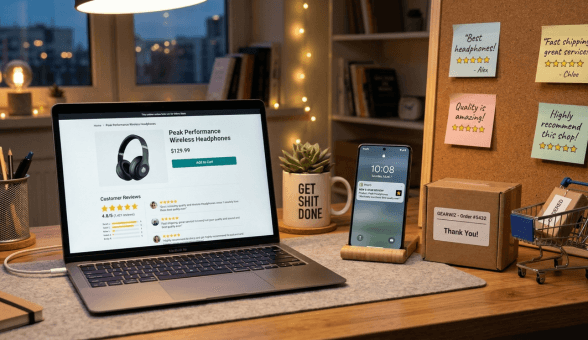
A product with zero reviews on your store is a product that customers scroll past. It does not matter how good the product is, how competitive the price is, or how beautiful the product photography is. Without reviews, there is no social proof, and without social proof, there is no trust. In Indian e-commerce, where 72% of online shoppers say they read at least 4 reviews before making a purchase decision, reviews are not optional. They are the single most influential factor in converting a browser into a buyer after price and product quality.
The data is hard to argue with. Products with 10 or more reviews see 52% higher conversion rates than products with zero reviews. Products with photo reviews see an additional 25% to 35% lift on top of that. A product page with a 4.2-star average from 50 reviews outsells an identical product with a 5.0-star average from 3 reviews, because volume of reviews signals popularity and the imperfect average (4.2 vs 5.0) feels more authentic. Customers are sophisticated. They know a perfect 5.0 from a handful of reviews looks suspicious.
Yet the majority of Indian e-commerce stores do almost nothing to actively collect reviews. They add a review form to their product pages and hope customers will fill it out voluntarily. The result is predictable: 1% to 3% of customers leave a review, mostly those who had a negative experience. Your best customers, the happy ones who would give you 4 and 5 stars, stay silent because nobody asked them. This guide changes that. It covers every method for collecting reviews, the best ways to display them for maximum conversion impact, category-specific review strategies, how to handle negative reviews like a professional, and the SEO benefits that reviews deliver. If your store runs on Boomimart, you will see how its CRM, WhatsApp integration, and customer account features make review collection systematic rather than accidental.
10 Review Collection Methods: From WhatsApp to Video Reviews
The difference between a store with 500 reviews and a store with 5 reviews is not the quality of their products. It is the quality of their review collection system. Here is every major method for collecting customer reviews, ranked by response rate and review quality:
| Review Collection Method | How It Works | Response Rate | Review Quality | Cost | Best For |
| Post-Purchase WhatsApp Message | Send automated WhatsApp message 3 to 7 days after delivery with direct review link. | 25% to 40% | High. Customers respond quickly in familiar channel. Photo uploads easy via WhatsApp. | Free to Rs 500/month (WhatsApp Business API) | All Indian e-commerce. Highest response rate channel. |
| Post-Purchase Email | Send automated email 5 to 7 days after delivery with review link or embedded form. | 5% to 12% | Moderate to High. Allows detailed reviews but lower open rates than WhatsApp. | Free to Rs 2,000/month (email platform) | Stores with email subscriber base. Good for detailed written reviews. |
| In-App Push Notification | Send push notification to mobile app users 3 to 5 days after delivery. | 15% to 25% | Moderate. Quick star ratings common. Photo uploads depend on app UX. | Included with mobile app | Stores with branded mobile apps (Boomimart apps) |
| On-Site Review Prompt (Order History Page) | Display review prompt next to delivered orders in customer’s account page. | 3% to 8% | High. Customer actively browsing the store, more likely to write detailed review. | Free (built into platform) | All stores. Passive but consistent collection. |
| SMS with Review Link | Send SMS with shortened review link 5 to 7 days after delivery. | 8% to 15% | Low to Moderate. SMS character limit means simple star ratings dominate. | Rs 0.15 to Rs 0.30 per SMS | Tier 2/3 customers who may not check email frequently. |
| QR Code in Package Insert | Include a printed card with QR code linking to review page inside the delivered package. | 3% to 7% | High. Customers who scan are motivated and write detailed reviews. | Rs 1 to Rs 3 per card (printing cost) | Premium brands wanting high-quality, detailed reviews. |
| Incentivized Review (Points, Discount, Lucky Draw) | Offer loyalty points, small discount, or lucky draw entry in exchange for a review. | 30% to 50% | Moderate. Higher volume but some reviews may be low-effort. Photo incentive improves quality. | Rs 10 to Rs 50 per review (loyalty points or discount value) | New stores that need review volume quickly. |
| Video Review Request | Ask customers to submit short video reviews (30 to 60 seconds) via WhatsApp or upload form. | 2% to 5% | Very High. Video reviews are the most persuasive social proof format. | Rs 50 to Rs 200 per video (higher incentive needed) | Fashion, beauty, food, electronics. High-impact visual categories. |
| Follow-Up for Non-Reviewers | Send a gentle reminder 14 days after delivery to customers who have not yet reviewed. | 5% to 10% (incremental on top of first request) | Moderate. Second-touch reviews tend to be briefer. | Free (automation) | All stores. Catches the ‘intended to but forgot’ segment. |
| Social Media Review Mining | Monitor brand mentions, tags, and hashtags on Instagram, YouTube, and Facebook. Curate and repurpose with permission. | N/A (passive collection) | Very High. Organic, authentic content with photos and videos. | Free (manual monitoring) to Rs 2,000/month (social listening tools) | D2C brands with active social media communities. |
The highest-ROI approach for Indian stores combines WhatsApp automated requests (primary channel, 25% to 40% response rate) with an in-app push notification for mobile app users, plus a follow-up reminder for non-respondents after 14 days. This triple-touch system typically yields a 20% to 30% overall review collection rate, which is 10x better than passive collection. Boomimart’s WhatsApp integration and mobile app push notifications make this entire workflow automated. For setting up your automated communication flows, our guide on boosting sales with your admin panel covers the CRM and automation capabilities.
Collect Reviews Automatically. Sell More. Try Boomimart!
10 Ways to Display Reviews for Maximum Conversion
Collecting reviews is only half the job. How and where you display them determines whether they actually influence purchase decisions. A beautifully designed product page with reviews hidden behind three clicks might as well have no reviews at all. Here are 10 display strategies that convert:
| Display Strategy | Where to Implement | Conversion Impact | Implementation Complexity | What It Looks Like |
| Star Rating on Product Listing (Category Page) | Product thumbnail cards on category and search result pages | +8% to +12% click-through rate to product page | Low | Small star icons (4.2 out of 5) with review count (47 reviews) below product name and price. |
| Detailed Review Section on Product Page | Below product description on individual product pages | +15% to +25% product page conversion rate | Moderate | Star breakdown bar (5-star: 60%, 4-star: 25%, etc.), individual reviews with name, date, verified badge, text, and photos. |
| Photo and Video Reviews Gallery | Dedicated tab or section on product page showing only reviews with images/videos | +20% to +35% conversion for products with photo reviews | Moderate | ‘Customer Photos’ carousel showing real product photos from buyers. Clickable to see full review. |
| Review Highlights or Summary | Top of review section on product page | +5% to +10% time-on-page and engagement | Low to Moderate | ‘Customers love: Quality (mentioned 32 times), Fast delivery (28 times), Value for money (24 times)’ keyword summary. |
| Reviews on Homepage (Social Proof Bar) | Scrolling testimonial section on homepage | +5% to +8% homepage conversion rate | Low | Auto-scrolling strip: customer name, city, star rating, short quote. Example: ‘Priya, Mumbai: Amazing quality! Will order again.’ |
| Reviews in Cart and Checkout | Mini review snippet next to products in cart page | +3% to +5% checkout completion (reduces abandonment anxiety) | Low | Small text under product in cart: ‘4.5 stars from 120+ happy customers’ with link to reviews. |
| Category-Level Social Proof Counter | Top of category listing pages | +3% to +5% category page engagement | Low | ‘This category: 2,340 reviews, 4.4 average rating.’ Establishes trust for the entire category. |
| Review Schema Markup (Rich Snippets) | Invisible on page, visible in Google search results | +15% to +30% organic click-through rate from Google | Low (technical SEO implementation) | Star rating and review count displayed directly in Google search results below your page title. Dramatically increases visibility. |
| ‘Verified Purchase’ Badge | Next to each review from confirmed buyers | +10% to +15% review credibility and influence on purchase decisions | Low | Green checkmark with ‘Verified Purchase’ text next to reviewer name. Signals authenticity. |
| Negative Review Response (Public) | Below negative reviews as a seller response | Turns negative reviews into trust signals. 68% of shoppers trust stores more when they see professional responses to complaints. | Low (requires consistent monitoring) | ‘Hi Rahul, we are sorry about your experience. We have shipped a replacement and added Rs 100 store credit. Please contact us anytime.’ Shows accountability. |
The combination of star ratings on category pages (catches attention during browsing), detailed review sections on product pages (builds confidence during evaluation), photo review galleries (provides visual proof), and review schema markup (increases Google visibility) creates a complete social proof ecosystem. Each display strategy reinforces the others, and the cumulative conversion impact is significantly greater than any single implementation.
For the technical SEO benefits of review schema markup and how to implement it on your store, our guide on essential schema markup for e-commerce provides step-by-step instructions. For product page optimization beyond reviews, our product page design guide covers the complete conversion toolkit.
Review Strategy by Product Category
Different product categories have different review dynamics. A fashion store needs photo reviews showing real people wearing the clothes. An electronics store needs detailed written reviews covering real-world performance. A food store needs freshness and taste confirmation. Here is the review landscape across 8 major Indian e-commerce categories:
| Product Category | Minimum Reviews Needed for Trust | Most Persuasive Review Type | Review Sensitivity (How Much Reviews Affect Purchase) | Key Review Elements Buyers Look For | Average Review Collection Rate |
| Fashion and Apparel | 10 to 15 per product | Photo reviews showing product on real people (not models). Fit and sizing comments. | Very High. 92% of fashion shoppers read reviews. Size accuracy is the #1 concern. | Accurate sizing? True to colour? Fabric quality? Fit on different body types? Washing durability? | 8% to 15% (higher with WhatsApp prompt) |
| Electronics | 15 to 25 per product | Detailed written reviews with real-world usage experience. Video unboxing reviews. | Very High. 88% read reviews. Technical accuracy and reliability are primary concerns. | Battery life? Build quality? Performance vs claims? Value for money? Warranty experience? | 10% to 18% (buyers love sharing tech opinions) |
| Beauty and Skincare | 8 to 12 per product | Photo reviews showing before/after results. Skin type-specific reviews. | High. 85% read reviews. Ingredient reactions and real results matter most. | Suitable for my skin type? Any irritation? Visible results? Fragrance? Packaging quality? | 6% to 12% (incentivize with samples) |
| Grocery and Food | 5 to 8 per product | Written reviews mentioning taste, freshness, packaging quality, and delivery condition. | Moderate. 60% read reviews. Brand trust and freshness are more important than peer reviews. | Fresh on arrival? True to taste expectations? Packaging intact? Shelf life adequate? Value for quantity? | 3% to 8% (food reviews need active solicitation) |
| Home Decor and Furniture | 8 to 15 per product | Photo reviews showing product in real homes. Assembly experience comments. | High. 80% read reviews. Colour accuracy, build quality, and dimensions are critical. | True to colour in photo? Sturdy build? Easy assembly? Matches room aesthetic? Delivery care? | 5% to 10% (photo incentive increases rate) |
| Books | 3 to 5 per title | Written reviews discussing content quality and readability. | Moderate. 55% read reviews. Author reputation and genre matter more. | Well-written? Engaging? Meets expectations from description? Print quality? Delivery speed? | 4% to 8% (book lovers review willingly) |
| Baby and Kids Products | 10 to 15 per product | Reviews from verified parents. Safety-focused reviews. | Very High. 90%+ read reviews. Safety and age-appropriateness are non-negotiable. | Safe for my child’s age? Non-toxic materials? Durable? As described? Other parents’ experience? | 10% to 20% (parents are generous reviewers) |
| Pet Products | 5 to 10 per product | Reviews mentioning pet’s response and acceptance. Photos of pets with product. | High. 75% read reviews. Pet acceptance and safety are primary concerns. | Did my pet actually like it? Safe ingredients? Durable? Size appropriate? Value for money? | 8% to 15% (pet owners love sharing) |
The most important insight from this table is that some categories need significantly more reviews to establish trust than others. Baby products and electronics require 10 to 25 reviews per product because the purchase decision carries higher stakes (child safety, expensive investment). Books and grocery items need fewer reviews because the decision carries lower risk. Prioritize your review collection efforts on high-sensitivity categories where reviews have the greatest conversion impact.
For category-specific selling strategies, explore our niche guides: launching a fashion boutique, building an electronics store, and selling cosmetics online.
Collect Reviews Automatically. Sell More. Try Boomimart!
Handling Negative Reviews: 8 Scenarios with Response Templates
Negative reviews are inevitable. No business has 100% perfect reviews, and attempting to achieve that by deleting or hiding negative feedback is both dishonest and counterproductive. Research shows that products with only 5-star reviews are actually trusted less than products with a mix of ratings (4.2 to 4.7 is the optimal range), because perfect scores appear manipulated. The real question is not how to avoid negative reviews but how to respond to them in a way that turns a complaint into a trust signal. Here are 8 common scenarios with the wrong response and the right response:
| Negative Review Scenario | Wrong Response | Right Response | Resolution Offer | Timeline |
| Product arrived damaged | Ignore the review or respond defensively: ‘Shipping damage is the courier’s fault.’ | ‘Hi [Name], we are sincerely sorry your product arrived damaged. This is unacceptable and we take full responsibility. We have initiated a free replacement that will ship today.’ | Free replacement + expedited shipping + Rs 50 store credit as apology | Respond within 4 hours. Ship replacement same day. |
| Product quality does not match description | ‘Our product descriptions are accurate. Perhaps you expected something different.’ | ‘Thank you for your honest feedback, [Name]. We value accuracy and will review this listing immediately. We would like to offer you a full refund or exchange. Please check your WhatsApp for resolution options.’ | Full refund or exchange + product listing update + Rs 100 store credit | Respond within 6 hours. Process refund within 24 hours. |
| Late delivery | ‘Delivery timelines are estimates and depend on the courier.’ | ‘Hi [Name], we understand how frustrating late deliveries are. Your order took [X] days instead of the expected [Y]. We are working with our logistics partner to prevent this. As an apology, here is free shipping on your next order.’ | Free shipping coupon for next order + internal shipping process review | Respond within 4 hours. |
| Wrong product sent | No response. Hope the customer forgets. | ‘We are deeply sorry, [Name]! Sending the wrong product is our mistake entirely. A return pickup has been scheduled and the correct product is shipping today at no extra cost. Please keep the wrong product as our apology gift.’ | Correct product shipped immediately + keep wrong product + Rs 100 credit | Respond within 2 hours. This is a highest-priority issue. |
| Customer did not like the product (taste, fit, style) | ‘This is a subjective opinion. The product is exactly as described.’ | ‘Thank you for your feedback, [Name]. We are sorry this product was not the right fit for you. Everyone has different preferences! We would love to help you find something you will enjoy. Check your WhatsApp for personalized recommendations.’ | Exchange offer or store credit + personalized alternative suggestions | Respond within 12 hours. |
| Customer received expired or near-expiry product | Delete the review (never do this) | ‘This is completely unacceptable, [Name], and we sincerely apologize. We have issued a full refund immediately and are investigating how this happened in our inventory. Your safety is our top priority.’ | Full refund immediately (no return needed) + free replacement with fresh product + internal inventory audit | Respond within 1 hour. Refund instantly. This is a compliance and safety issue. |
| Fake or malicious review | Respond aggressively or accuse the reviewer of lying publicly | If clearly fake (no order record): report to platform for removal. If borderline: respond professionally with facts. ‘We could not find an order matching this description. If you have an order number, please share it and we will resolve this immediately.’ | Offer to investigate with order details. Flag for platform review if no legitimate purchase found. | Respond within 12 hours. Escalate to platform if clearly fraudulent. |
| 1-star review with no text (just a rating) | Ignore it. | ‘Hi [Name], we noticed you rated your recent purchase 1 star. We would love to understand what went wrong so we can make it right. Please reach out via WhatsApp [number] and we will resolve this immediately.’ | Proactive outreach via WhatsApp. Often converts 1-star to 4-star after resolution. | Respond within 6 hours. |
The golden rules for responding to negative reviews are consistent across all scenarios: respond quickly (within 4 to 12 hours), acknowledge the problem without deflecting blame, offer a specific resolution (not vague promises), take the detailed conversation offline (WhatsApp or phone) while keeping the public response professional, and follow up to ensure the issue is resolved. A well-handled negative review often converts the unhappy customer into a loyal advocate, and the public response shows all future customers that you stand behind your products.
The SEO Power of Customer Reviews
Reviews do not just convert visitors into buyers. They also bring more visitors to your store in the first place through several powerful SEO mechanisms:
- Fresh, unique content on every product page. Google values pages that are regularly updated with fresh content. Every new customer review adds unique text to your product page, signalling to search engines that the page is active and relevant. A product page with 50 reviews has significantly more indexable content than a page with only your product description.
- Long-tail keyword generation. Customers naturally use long-tail search phrases in their reviews: ‘best running shoes for flat feet,’ ‘comfortable office chair for long hours,’ ‘organic baby food for 8 month old.’ These are exactly the search terms other potential customers type into Google. Reviews effectively write your long-tail SEO content for free.
- Rich snippets in Google search results. When you implement review schema markup, Google displays star ratings and review counts directly in search results. A listing showing ‘4.4 stars from 127 reviews’ stands out dramatically from competitors without ratings, increasing your organic click-through rate by 15% to 30%.
- Reduced bounce rate and increased dwell time. Visitors who read reviews spend more time on your product pages. Google interprets this extended engagement as a positive quality signal, which can improve your search rankings over time.
- User-generated FAQ content. Reviews often answer common questions that potential buyers have: ‘Does this run large or small?’, ‘Is the colour the same as the photo?’, ‘How long does the battery actually last?’ This user-generated Q&A content helps your pages rank for question-based searches.
For comprehensive SEO strategies beyond reviews, our guide on driving e-commerce traffic and our schema markup implementation guide cover the full organic growth toolkit.
Beyond Text Reviews: Building a User-Generated Content Engine
Text reviews are the foundation, but the most powerful social proof comes from visual content created by your customers. Here is how to build a user-generated content (UGC) engine around your review system:
- Photo reviews with incentives. Offer double loyalty points or an extra Rs 25 store credit for reviews that include a photo of the product. Photo reviews convert 25% to 35% better than text-only reviews because they show the actual product in a real customer’s hands, home, or on their body.
- Instagram hashtag campaigns. Create a branded hashtag (#MyStoreName or #StoreNameStyle) and include it on a card inside every package: ‘Share your purchase on Instagram with #[Hashtag] for a chance to be featured on our page and win Rs 200 store credit.’ Curate the best posts and repost with permission.
- Video review programme. For high-value or visually rich products, invite top customers to create 30 to 60 second video reviews. Offer Rs 100 to Rs 200 store credit per approved video. Feature these videos on product pages and in advertising. Video reviews are 5x more persuasive than text for fashion, beauty, and electronics.
- Customer spotlight stories. Feature one customer’s story per week on your social media and blog: how they use your product, why they chose your brand, their honest experience. This deeper storytelling builds emotional connection that star ratings alone cannot achieve.
- Review-based product improvement loop. Publicly announce when customer feedback leads to product improvements: ‘You asked for a larger size. We listened. Now available in XL and XXL!’ This shows customers that their reviews actually matter, dramatically increasing future review participation.
Review Management Mistakes That Damage Your Brand
- Deleting or hiding negative reviews. Customers notice when a store has only 5-star reviews. It looks fake. A mix of reviews (with professional responses to negative ones) is more credible than a sanitized review section. The Consumer Protection Act also prohibits manipulation of consumer feedback.
- Writing fake reviews yourself. Fabricated reviews are detectable (similar writing style, no purchase verification, generic praise) and destroy credibility when discovered. One viral social media post exposing fake reviews can permanently damage your brand. Never do this.
- Not asking for reviews at all. Waiting for customers to voluntarily leave reviews results in a 1% to 3% review rate, skewed heavily towards negative experiences. Active, systematic collection is the only way to build a representative review portfolio.
- Asking too early. Sending a review request on delivery day (or before delivery) frustrates customers who have not yet used the product. Wait 3 to 7 days after delivery so they have genuine experience to share.
- Making the review process too complex. Requiring account login, clicking through 3 pages, and filling 10 fields kills review completion. The ideal review form: star rating (one tap) + optional text + optional photo upload. Three fields, one page, 30 seconds.
- Offering too-large incentives. Offering Rs 500 off for a review creates suspicion that you are buying positive reviews. Keep incentives small and proportional: 10 to 50 loyalty points, Rs 25 to Rs 50 store credit, or a lucky draw entry. The incentive should motivate the effort of writing, not compensate for dishonesty.
- Not responding to any reviews. When positive reviewers get no acknowledgment and negative reviewers get no resolution, it signals that the brand does not care about customer feedback. Thank positive reviewers occasionally (‘Thanks Priya, glad you loved it!’) and always respond to negative ones promptly.
Your 30-Day Review Collection System Launch Plan
- Days 1 to 5: Setup. Enable the review section on all product pages in your Boomimart store. Configure review schema markup for SEO rich snippets. Design your review request WhatsApp and email templates. Set up the incentive structure (loyalty points or store credit per review).
- Days 6 to 10: Backfill existing customers. Send a WhatsApp campaign to all customers who purchased in the last 90 days asking for reviews on their past orders. Offer a bonus incentive for this initial batch: ‘We are launching our review programme! Be among the first to review and earn double points.’ This creates an initial foundation of reviews.
- Days 11 to 20: Automate ongoing collection. Set up automated WhatsApp review request triggered 5 days after delivery confirmation. Configure follow-up reminder for non-reviewers at day 14. Set up in-app push notification for mobile app users at day 3. Test the entire flow with a few orders.
- Days 21 to 25: Display optimization. Add star ratings to category page product cards. Create photo review gallery sections on product pages. Add social proof bar to homepage. Display review count next to products in cart. Verify schema markup is appearing in Google Search Console.
- Days 26 to 30: Monitor and refine. Track review collection rate (target: 15%+ of delivered orders). Monitor average rating across all products. Identify products with zero reviews and prioritize review collection for them. Respond to all negative reviews within 12 hours. Measure conversion rate change on product pages with reviews vs without.
A systematic review collection programme transforms your store from a catalog of products into a community of validated purchases. Every review adds trust, every photo review adds visual proof, and every thoughtful response to a negative review demonstrates professionalism. With Boomimart’s CRM, WhatsApp automation, mobile app push notifications, and customer account system, you have the complete infrastructure to collect, display, and leverage reviews as your most powerful sales tool.
Request a free demo and see how Boomimart helps you build social proof that converts browsers into buyers.