Email Marketing for E-commerce: Build Campaigns That Actually Convert

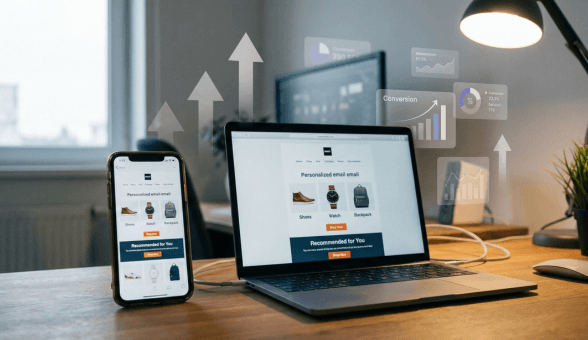
Everyone talks about social media marketing, paid ads, and influencer collaborations. But quietly, email marketing continues to deliver the highest return on investment of any digital marketing channel. For every rupee you spend on email, you get back Rs 36 to Rs 42. No other channel comes close. Not Google Ads. Not Facebook. Not Instagram. The reason is simple: email reaches customers who have already shown interest in your business. They gave you their email address. They want to hear from you. That is a fundamentally different relationship than interrupting someone’s social media feed with an ad.
Yet most Indian e-commerce sellers either ignore email marketing entirely or do it so poorly that it hurts more than it helps. Sending the same generic promotional blast to your entire list every week is not email marketing. It is a fast track to the spam folder. Effective e-commerce email marketing is about sending the right message to the right customer at the right time, triggered by their actual behaviour on your store.
This guide covers how to build email campaigns that genuinely convert for Indian e-commerce businesses. From the essential automated flows that every store needs to subject line psychology and list segmentation, you will learn the strategies that turn your email list into your most profitable sales channel. And if you run your store on Boomimart, you will see how its built-in CRM and WhatsApp integration create a unified communication engine that multiplies the impact of every email you send.
Why Email Still Beats Every Other Marketing Channel
Before investing time in email marketing, it helps to understand how it compares to other channels Indian e-commerce sellers commonly use:
| Marketing Channel | Avg. Cost per Conversion (India) | Open/Click Rate | ROI per Rs 1 Spent | Best For |
| Email Marketing | Rs 5 to Rs 25 | Open: 18% to 25%, Click: 2% to 5% | Rs 36 to Rs 42 | Retention, repeat purchases, nurture sequences |
| WhatsApp Marketing | Rs 15 to Rs 50 (per message cost) | Open: 85% to 95%, Click: 15% to 30% | Rs 15 to Rs 25 | Urgent offers, cart recovery, order updates |
| Google Ads (Search) | Rs 80 to Rs 300 | Click: 3% to 5% (CTR) | Rs 5 to Rs 12 | High-intent buyers searching for products |
| Facebook/Instagram Ads | Rs 50 to Rs 200 | Click: 0.9% to 1.5% (CTR) | Rs 4 to Rs 10 | Brand awareness, new customer acquisition |
| SMS Marketing | Rs 8 to Rs 20 (per SMS) | Open: 90%+, Click: 2% to 5% | Rs 8 to Rs 15 | Flash sales, OTP, time-sensitive alerts |
| Organic Social Media | Rs 0 (time investment only) | Engagement: 1% to 3% | Difficult to measure directly | Community building, brand personality |
| Push Notifications (App) | Rs 0 per notification | Open: 40% to 60% | Very high (zero marginal cost) | Repeat purchases, app engagement |
The ROI column tells the real story. Email marketing generates Rs 36 to Rs 42 for every rupee spent because you are communicating with an audience that already knows your brand. The cost per conversion is a fraction of paid advertising, and unlike social media where algorithm changes can tank your reach overnight, your email list is an asset you own.
The smartest Indian e-commerce businesses are not choosing between email and WhatsApp or email and ads. They are using each channel for what it does best. Email handles nurturing, storytelling, and repeat purchase driving. WhatsApp handles urgency and real-time communication. Paid ads handle new customer acquisition. Boomimart’s integrated CRM lets you coordinate across all these channels from a single dashboard, ensuring customers receive consistent messaging regardless of the channel.
10 Email Campaigns Every E-commerce Store Must Have
Not all emails are created equal. Some campaign types consistently outperform others in e-commerce. Here is the complete lineup of automated and manual campaigns your store needs, ranked by revenue impact:
| Email Campaign Type | Trigger/Timing | Avg. Open Rate | Avg. Conversion Rate | Revenue Impact |
| Welcome Series (3 to 5 emails) | Immediately after signup or first purchase | 50% to 70% | 3% to 5% | Sets tone; welcome emails generate 3x revenue of regular emails |
| Abandoned Cart Recovery | 1 hour, 24 hours, and 72 hours after abandonment | 40% to 50% | 5% to 10% | Recovers 10% to 15% of abandoned carts; highest ROI email type |
| Post-Purchase Follow-up | 2 to 3 days after delivery | 40% to 50% | 2% to 4% (cross-sell) | Builds loyalty, reduces returns, drives reviews |
| Browse Abandonment | 2 to 4 hours after browsing without adding to cart | 30% to 40% | 1% to 3% | Captures interest before it fades; lower intent than cart recovery |
| Win-Back Campaign | 30, 60, and 90 days after last purchase | 15% to 25% | 1% to 3% | Re-activates 3% to 8% of dormant customers |
| Product Launch/New Arrivals | When new products are added to catalog | 20% to 30% | 1% to 3% | Drives excitement and early sales momentum |
| Flash Sale/Festive Offer | 24 to 48 hours before sale starts | 25% to 35% | 3% to 8% | Creates urgency; highest click rates after abandoned cart |
| Monthly Newsletter | 1st or 15th of every month (consistent schedule) | 15% to 20% | 0.5% to 1.5% | Keeps brand top-of-mind; lowest direct conversion but builds long-term relationship |
| Review Request | 5 to 7 days after delivery confirmation | 30% to 40% | N/A (drives reviews, not sales) | Reviews boost conversion rates on product pages by 15% to 30% |
| Loyalty/Rewards Update | Monthly or when rewards milestone is reached | 35% to 45% | 2% to 5% | Increases repeat purchase frequency and customer lifetime value |
The first three campaigns in this table, welcome series, abandoned cart recovery, and post-purchase follow-up, should be your absolute priority. Together, they cover the most critical touchpoints in the customer journey and generate the lion’s share of email-driven revenue. If you set up nothing else, set up these three automated flows first.
For more on reducing cart abandonment through both email and on-site optimization, our detailed guide on mastering e-commerce checkout design covers the conversion side, while our prepaid orders and COD reduction guide addresses payment-related abandonment.
Turn Your Email List into Revenue. See Boomimart's CRM in Action!
Building a Welcome Series That Sets the Tone
Your welcome email series is the highest-performing automated sequence you will ever build. New subscribers are at peak curiosity about your brand. Their attention and goodwill will never be higher than right now. Here is a five-email welcome series structure that works consistently for Indian e-commerce stores:
- Email 1 (Immediately after signup): The warm welcome. Thank them for joining. Deliver any promised incentive (10% off first order, free shipping code). Introduce your brand story briefly. Include your top 3 to 5 bestsellers. Keep it clean and focused. One clear call-to-action: shop now with your discount code.
- Email 2 (Day 2): Your story and values. Why does your brand exist? What makes your products different? If you are a D2C brand, this is where you share your origin story, your sourcing practices, or your commitment to quality. People buy from brands they connect with emotionally.
- Email 3 (Day 4): Social proof and bestsellers. Customer testimonials, review highlights, media mentions, and your top-rated products. This email builds trust by showing that other people love your products. Include star ratings and real customer photos if available.
- Email 4 (Day 6): Category education. Help them browse your catalog. Introduce your main product categories with curated selections. If you sell across multiple categories, guide them towards the ones most relevant to their initial interest.
- Email 5 (Day 8): Urgency and final nudge. Remind them their welcome discount is expiring. Create genuine urgency. Include product recommendations based on their browsing behaviour (if available) or your top converters. This email often generates the highest conversion in the series because it combines familiarity (they have seen 4 previous emails from you) with urgency (the offer is ending).
Each email should be mobile-optimized (70% or more of Indian email opens happen on smartphones), use a single-column layout, and have one clear primary call-to-action button. For tips on optimizing the product pages your email links lead to, read our guide on design and development techniques to improve your product page.
The Abandoned Cart Email Sequence That Recovers Revenue
Cart abandonment in Indian e-commerce runs between 70% and 80%. That means for every 10 customers who add products to their cart, 7 to 8 leave without buying. An automated abandoned cart email sequence can recover 10% to 15% of those lost sales. Here is the three-email structure that maximizes recovery:
- Email 1 (1 hour after abandonment): The gentle reminder. Subject line: ‘You left something behind.’ No discount. No pressure. Just show them the exact products in their cart with images, prices, and a direct link back to their cart. Many abandonments are accidental (phone distraction, internet drop, got busy). This email catches those easy recoveries.
- Email 2 (24 hours after abandonment): Address the objection. Subject line: ‘Still thinking it over?’ Add trust elements: customer reviews for the carted products, your return policy, shipping timeline, and payment security assurances. If the customer abandoned because of uncertainty, this email provides the confidence they need.
- Email 3 (72 hours after abandonment): The incentive. Subject line: ‘Your cart is waiting + a little something extra.’ Now offer a small incentive: free shipping, 5% to 10% discount, or a bonus gift. Make it time-limited (48 hours). This email catches the price-sensitive shoppers who needed a small nudge.
Critical rule: never lead with a discount in Email 1. If customers learn they get a discount by abandoning their cart, they will do it intentionally every time. The discount should only appear in the third email as a last resort, and it should be small enough to protect your margins.
Boomimart’s WhatsApp integration adds a powerful parallel channel to this sequence. While your email sequence runs, a WhatsApp reminder at the 4-hour mark catches customers who may not check email quickly but have WhatsApp open constantly. This multi-channel approach to cart recovery consistently outperforms email-only sequences. For more on leveraging WhatsApp for commerce, explore Boomimart’s WhatsApp integration features.
Turn Your Email List into Revenue. See Boomimart's CRM in Action!
Subject Line Strategies That Get Your Emails Opened
Your email’s subject line determines whether it gets opened or ignored. A brilliant email with a boring subject line generates zero revenue. Here are the subject line formulas that consistently deliver the highest open rates for Indian e-commerce:
- Curiosity gap: ‘The one thing our bestselling kurta has in common with silk sarees.’ Opens a loop that the reader needs to click to close.
- Urgency with specificity: ‘Your 15% off expires at midnight tonight.’ Specific deadlines outperform vague urgency like ‘limited time offer.’
- Personalization with name: ‘Priya, we picked these just for you.’ Using the customer’s first name lifts open rates by 10% to 15%.
- Number-driven: ‘5 kitchen essentials under Rs 999.’ Numbers set expectations and feel digestible. Odd numbers perform slightly better than even ones.
- Social proof: ‘1,200 customers rated this 5 stars. You will too.’ Leverages herd behaviour.
- Direct benefit: ‘Free shipping on everything this weekend.’ When the offer is strong, say it plainly.
Keep subject lines under 50 characters for mobile optimization. Test two variations of every campaign subject line (A/B testing) and let data guide your future choices.
List Segmentation: Stop Sending the Same Email to Everyone
The single biggest mistake in e-commerce email marketing is treating your entire list as one audience. A first-time browser and a customer who has purchased five times should receive fundamentally different emails. Segmentation is what separates stores that generate Rs 5 per email subscriber from those generating Rs 50 per subscriber.
Here are the essential segments every e-commerce store should create:
- By purchase history: Never purchased, purchased once, purchased 2 to 4 times, VIP (5+ purchases). Each segment needs different messaging: acquisition for non-buyers, cross-sell for one-time buyers, loyalty rewards for repeat customers, exclusive access for VIPs.
- By recency: Active (purchased in last 30 days), cooling (31 to 90 days), at risk (91 to 180 days), dormant (180+ days). Recency determines urgency of re-engagement efforts.
- By average order value: Budget shoppers (below Rs 500), mid-range (Rs 500 to Rs 2,000), premium (Rs 2,000+). High-AOV customers should receive premium product recommendations and early access to new collections.
- By product category interest: Based on browsing and purchase history. A customer who buys only skincare should not receive emails about kitchen appliances.
- By engagement level: Highly engaged (opens most emails), moderately engaged, disengaged (has not opened in 60+ days). Disengaged subscribers should receive a re-engagement campaign before being cleaned from your list to protect deliverability.
Boomimart’s CRM captures customer behaviour data (purchases, browsing, cart activity, order values) that powers intelligent segmentation. This data, combined with your email platform, lets you automate personalized messaging at scale. For a deeper understanding of how to leverage customer data for marketing, our guide on data layer tracking mastery explains the analytics foundation.
Choosing an Email Marketing Platform
The right email platform depends on your list size, budget, technical comfort, and integration needs. Here is how the most popular options compare for Indian e-commerce sellers:
| Email Platform | Free Tier | Paid Plans (Monthly) | Best Feature | Best For |
| Mailchimp | 500 contacts, 1,000 sends/month | Rs 800 to Rs 25,000+ | Drag-and-drop editor, automations | Beginners with small lists |
| Brevo (formerly Sendinblue) | Unlimited contacts, 300 emails/day | Rs 600 to Rs 5,000+ | Transactional + marketing in one, WhatsApp integration | Indian SMBs wanting all-in-one |
| Zoho Campaigns | 2,000 contacts, 6,000 emails/month | Rs 250 to Rs 3,000+ | Deep Zoho ecosystem integration | Businesses already using Zoho CRM |
| Klaviyo | 250 contacts, 500 emails/month | Rs 1,500 to Rs 15,000+ | E-commerce data integration, predictive analytics | Data-driven e-commerce brands |
| ConvertKit | 1,000 subscribers | Rs 750 to Rs 5,000+ | Creator-focused automations, landing pages | Content-driven D2C brands |
| Amazon SES | 62,000 emails/month (if hosted on AWS) | Rs 0.07 per 100 emails | Rock-bottom pricing at scale | Tech-savvy teams with developer resources |
| Boomimart CRM + WhatsApp | Included with Boomimart plans | Part of Boomimart subscription | Unified customer data, WhatsApp + email from one dashboard | Boomimart store owners (integrated approach) |
For Boomimart store owners, the built-in CRM provides the customer data foundation that any email platform needs. Whether you choose Mailchimp, Brevo, Zoho, or another tool, the key is ensuring it can sync with your store’s customer and order data to power automated, behaviour-triggered campaigns.
Email Design Principles That Drive Clicks
- Single-column layout only. Multi-column emails break on mobile devices. Since 70%+ of opens are mobile, a single column is non-negotiable.
- One primary CTA per email. Every email should have one clear action you want the reader to take. Multiple CTAs create decision paralysis and reduce click-through rates.
- Product images that match your store. Use the same high-quality product photos from your store. Consistency between email and landing page builds trust and reduces bounce. For tips on getting those images right, our product page design guide covers the full approach.
- Preheader text is prime real estate. The preheader (the preview text visible in the inbox next to the subject line) should complement your subject line, not repeat it. Use it to add context or create additional curiosity.
- Keep emails under 200 words for promotions. Promotional emails are not blog posts. Short, punchy copy with strong visuals and a clear CTA outperforms long-winded emails every time.
- Include your store URL and social links in every footer. Even if the reader does not click the main CTA, they may visit your store later. Make it easy to find you.
Email Deliverability: Getting Past the Spam Folder
None of your email strategies matter if your messages land in spam. Deliverability is the foundation everything else is built on. Here are the practices that keep your emails in the inbox:
- Authenticate your domain. Set up SPF, DKIM, and DMARC records for your sending domain. These are technical configurations your email platform will guide you through. Without them, Gmail and Yahoo will flag your emails.
- Never buy email lists. Purchased lists contain spam traps, invalid addresses, and people who never opted in. Sending to bought lists will destroy your sender reputation within weeks. Every email address on your list should come from voluntary opt-in on your store.
- Clean your list regularly. Remove hard bounces immediately. Suppress soft bounces after 3 consecutive failures. Run a re-engagement campaign for subscribers who have not opened in 90 days, and remove them if they still do not engage after 2 to 3 attempts.
- Maintain consistent sending volume. Sending 50 emails one week and 50,000 the next looks suspicious to spam filters. Gradually increase your volume and maintain a consistent sending pattern.
- Monitor your metrics. Track bounce rate (keep under 2%), spam complaint rate (keep under 0.1%), and unsubscribe rate (keep under 0.5%). If any metric spikes, pause and diagnose before sending again.
Email Marketing Mistakes That Cost You Sales
- Sending without segmentation. A promotional email for men’s shoes sent to your entire list (including women who only buy skincare) trains people to ignore your emails. Relevance drives revenue.
- No automated flows. If you are only sending manual campaign blasts, you are leaving the highest-converting email types (welcome, abandoned cart, post-purchase) on the table. Automation should be running 24/7.
- Inconsistent sending schedule. Emailing once in January, three times a week in February, then disappearing until April confuses subscribers and harms deliverability. Pick a sustainable frequency and stick to it.
- Ignoring mobile optimization. Emails that look beautiful on desktop but are unreadable on mobile waste 70% of your sends. Test every email on a smartphone before hitting send.
- Discount-only messaging. If every email you send is ‘X% off! Sale! Discount!’, you train customers to only buy during promotions. Mix in value-driven content: product education, styling tips, customer stories, and behind-the-scenes content.
- Not tracking revenue per email. Open rates and click rates are vanity metrics. Revenue per email and revenue per subscriber are the numbers that matter. Track them religiously and optimize for revenue, not opens.
Your 30-Day Email Marketing Launch Plan
- Week 1: Foundation. Choose your email platform. Connect it to your Boomimart store. Set up domain authentication (SPF, DKIM, DMARC). Import your existing customer list with proper segmentation tags.
- Week 2: Core automations. Build and activate your welcome series (5 emails) and abandoned cart sequence (3 emails). These two flows will start generating revenue immediately on autopilot.
- Week 3: Expand and optimize. Add post-purchase follow-up and review request automations. Create your first segmented campaign (VIP customers or category-specific recommendation). A/B test your subject lines.
- Week 4: Measure and refine. Review your first month’s data: revenue per email, open rates, click rates, unsubscribe rates, and conversion rates by campaign type. Double down on what works. Fix or kill what does not.
Email marketing is a compounding asset. Every month that your automations run, your list grows, your data gets richer, and your ability to personalize improves. The stores that start building this channel today will have an enormous advantage over competitors who keep relying solely on paid ads.
With Boomimart’s CRM, you have the customer data engine that powers effective email marketing. Combined with WhatsApp integration for real-time communication and a native mobile app for push notifications, you build a multi-channel retention system that keeps customers coming back without spending more on ads.
Request a free demo and see how Boomimart’s customer management tools can power your email marketing strategy.