Personalization Strategies That Increase E-commerce Revenue by 30%

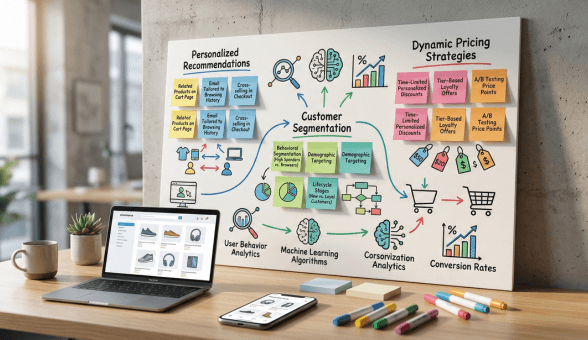
Every time a customer lands on your online store, they face the same problem: too many products, too little time, and no idea where to start. A store with 500 products and no personalization is essentially a warehouse with a search bar. The customer has to do all the work: browsing, filtering, comparing, and deciding. Most of them give up before finding what they need. But a store that shows the right products to the right customer at the right moment transforms that overwhelming warehouse into a curated shopping experience. That transformation is personalization, and it is the single most impactful revenue lever available to Indian e-commerce businesses in 2026.
The numbers are compelling. Personalized product recommendations account for 10% to 30% of total e-commerce revenue. Personalized emails generate 6x higher transaction rates than generic blasts. Customers who experience personalization are 80% more likely to make a purchase. And the compound effect is staggering: a store that personalizes its homepage, product recommendations, email campaigns, and checkout experience typically sees a 25% to 35% overall revenue increase within 6 to 12 months, with no increase in advertising spend.
This guide covers every personalization strategy available to Indian e-commerce businesses: from simple product recommendations you can implement today, to advanced AI-powered experiences that require sophisticated customer data. Whether you run a 50-product niche store or a 5,000-SKU multi-category operation, there are personalization tactics here that will directly increase your revenue. If your store runs on Boomimart, you will see how its integrated CRM, customer accounts, WhatsApp commerce, branded mobile apps, and product management tools provide the data and delivery infrastructure that makes personalization work.
10 Personalization Strategies Ranked by Revenue Impact
Not all personalization is created equal. Some strategies deliver immediate revenue gains with minimal effort, while others require significant data infrastructure but unlock transformative results at scale. Here is every major personalization strategy, ranked and evaluated:
| Personalization Strategy | How It Works | Revenue Impact | Data Required | Implementation Complexity | Best For |
| Product Recommendations (‘Customers Also Bought’) | Display products frequently purchased together or viewed after the current product. Uses collaborative filtering. | +10% to +15% average order value | Purchase history, co-browsing data, product catalog relationships | Moderate (algorithm-based or rule-based) | All e-commerce stores with 50+ products |
| Recently Viewed Products | Show a persistent strip of products the customer has browsed in the current and recent sessions. | +5% to +8% return visit conversion | Session browsing data (cookies or account-based) | Low (standard e-commerce feature) | All stores. Essential for comparison shoppers. |
| Personalized Homepage | Display different homepage sections based on customer segment: new visitor vs returning, category affinity, location. | +15% to +25% homepage conversion rate | Customer segment, browsing history, purchase history, location | Moderate to High | Stores with diverse product catalogs |
| Dynamic Pricing and Offers | Show different offers based on customer value: loyalty tier discounts, first-time buyer coupons, win-back discounts for lapsed customers. | +8% to +12% overall conversion rate | CRM data: purchase frequency, recency, lifetime value, segment | Moderate (CRM segmentation + conditional discount rules) | Stores with active CRM and loyalty programs |
| Personalized Email and WhatsApp Campaigns | Send targeted messages based on behaviour: abandoned cart, browse abandonment, post-purchase cross-sell, birthday offers, replenishment reminders. | +20% to +35% email/WhatsApp revenue (vs generic blasts) | Email/phone, purchase history, browsing behaviour, lifecycle stage | Moderate (marketing automation setup) | All stores with customer contact data |
| Location-Based Personalization | Show products, pricing, shipping estimates, and language based on customer’s city, state, or region. | +5% to +10% conversion from regional relevance | IP geolocation or account address | Low to Moderate | Pan-India stores, regional food brands, multi-language stores |
| Search Personalization | Personalize on-site search results based on past behaviour. A customer who bought running shoes sees running gear first when searching ‘shoes.’ | +10% to +15% search-to-purchase conversion | Search history, purchase history, category affinity | High (requires personalized search engine) | Large catalog stores (200+ products) |
| Personalized Push Notifications (Mobile App) | Send contextual push notifications based on behaviour: price drops on wishlisted items, back-in-stock alerts, location-based offers. | +12% to +20% app engagement and repeat purchases | App usage data, wishlist, location, purchase history | Moderate (mobile app + notification engine) | Stores with branded mobile apps (Boomimart apps) |
| User-Generated Content Personalization | Show reviews, photos, and testimonials from customers in the same city, age group, or with similar purchase patterns. | +8% to +15% conversion from social proof relevance | Review data with customer demographics, location tags | Moderate | Fashion, beauty, food, lifestyle brands |
| AI-Powered Chatbot Recommendations | Chatbot asks questions about preferences and suggests products in real-time. Acts as a personal shopping assistant. | +15% to +25% conversion for engaged chat users | Product catalog, customer preferences, conversation context | High (AI chatbot integration) | Stores with complex or premium product selection |
For most Indian e-commerce stores, the highest-ROI starting point is the combination of personalized email/WhatsApp campaigns (easiest to implement with immediate revenue impact) plus product recommendations on product pages (drives cross-sell and AOV increase). These two strategies alone can deliver a 15% to 25% revenue increase before you invest in more advanced personalization layers.
Boomimart’s CRM captures the purchase history, browsing behaviour, and contact data you need to power these strategies. For a deeper understanding of how to build your customer data foundation, our guide on data layer tracking mastery covers the technical setup.
Know Your Customer. Grow Your Revenue. Start with Boomimart!
Customer Segmentation: The Foundation of All Personalization
Personalization without segmentation is just guesswork. Before you can show the right product to the right customer, you need to know who your customers are, what they have done, and what they are likely to want next. Customer segmentation divides your audience into groups that share common behaviours, needs, or characteristics, so you can tailor your messaging, offers, and product displays to each group. Here are the 10 segments every Indian e-commerce store should build:
| Customer Segment | Definition | Size (Typical Indian Store) | Personalization Priority | Recommended Actions | Expected Revenue Impact |
| New Visitors (Anonymous) | First-time visitors who have not created an account or made a purchase. | 60% to 70% of all traffic | Medium. Focus on trust building and first conversion. | Show bestsellers, trust badges, reviews. Offer first-purchase discount (5% to 10%). Display easy return policy. Show COD availability prominently. | +3% to +5% first-purchase conversion rate |
| First-Time Buyers (1 order) | Customers who made their first purchase but have not returned. | 40% to 50% of customer base | Highest. This is your biggest retention opportunity. | Post-purchase email/WhatsApp: thank you + usage tips. Day 7: cross-sell related products. Day 14: review request. Day 30: replenishment reminder or loyalty signup. | +15% to +25% second purchase rate |
| Active Customers (2 to 4 orders) | Customers who have ordered multiple times within the last 90 days. | 15% to 25% of customer base | High. Nurture towards loyalty and higher spend. | Loyalty program enrollment. Tier upgrade communication. Personalized product recommendations based on purchase history. Early access to sales. | +10% to +15% order frequency increase |
| VIP/Loyal Customers (5+ orders or top 10% by spend) | Your most valuable customers who order frequently and spend significantly above average. | 5% to 10% of customer base (but 30% to 50% of revenue) | Very High. Protect these customers at all costs. | Exclusive VIP offers. Free shipping always. Birthday and anniversary gifts. Personal outreach (WhatsApp message from founder). Premium support priority. | +20% to +30% lifetime value protection |
| At-Risk Customers (No order in 60 to 90 days) | Previously active customers whose purchase frequency has dropped significantly. | 10% to 20% of customer base | High urgency. Re-engage before they churn. | Win-back email/WhatsApp with personalized offer. ‘We miss you’ campaign with bonus points or discount. Show new arrivals since their last visit. | Recover 15% to 25% of at-risk customers |
| Dormant Customers (No order in 90 to 180 days) | Customers who have gone silent for an extended period. | 15% to 25% of customer base | Medium. Lower success rate but worth attempting. | Final win-back offer (strongest discount). Survey asking why they left. If no response after 2 attempts, reduce communication frequency to avoid spam perception. | Recover 5% to 10% of dormant customers |
| High AOV Customers | Customers whose average order value is 2x+ above your store average. | 10% to 15% of customer base | High. Protect and expand spend. | Premium product recommendations. EMI options for high-ticket items. Bundle and combo offers to increase basket size further. Luxury packaging option. | +10% to +20% AOV expansion |
| Cart Abandoners | Visitors who added products to cart but did not complete checkout. | 65% to 80% of cart sessions | Very High. Immediate revenue recovery. | 1-hour WhatsApp/email reminder (no discount). 24-hour follow-up addressing objections (trust, shipping, returns). 72-hour final nudge with small incentive. | Recover 10% to 15% of abandoned carts |
| Referral Champions | Customers who actively refer friends and share on social media. | 2% to 5% of customer base | High. Amplify their advocacy. | Double referral rewards. Exclusive referrer status. Early access to new products. Feature their reviews prominently. Send them free samples of new launches. | +25% to +40% referral revenue increase |
| COD-Only Customers | Customers who exclusively pay via Cash on Delivery. | 20% to 35% of customer base (varies by tier) | Medium. Gradually shift to prepaid. | Prominent prepaid discount at checkout. WhatsApp payment link after COD order. UPI AutoPay for repeat orders. Build trust with order tracking and fast delivery. | 15% to 25% shift to prepaid over 3 months |
The most impactful segments to build first are First-Time Buyers (biggest retention opportunity), Cart Abandoners (immediate revenue recovery), and VIP/Loyal Customers (highest revenue protection). If you only personalize for these three segments, you will see a meaningful revenue increase within 30 days. Boomimart’s CRM allows you to create and manage these segments using purchase history, order frequency, spend thresholds, and recency filters. For strategies on maximizing CRM-driven engagement, our guide on boosting e-commerce sales with your admin panel covers the operational toolkit.
Touchpoint-by-Touchpoint Personalization: From Homepage to Post-Purchase
A customer’s journey through your store has 10 or more distinct touchpoints, and each one is an opportunity to personalize. The difference between a generic and personalized experience at each stage compounds dramatically. Here is what personalization looks like at every major touchpoint:
| Customer Touchpoint | Generic Experience | Personalized Experience | Conversion Lift | Boomimart Capability |
| Homepage | Same bestsellers and banners for everyone | Dynamic sections: returning customer sees recently viewed + recommended. New visitor sees bestsellers + trust signals + first-order discount. | +15% to +25% | Customizable homepage sections per customer segment |
| Product Listing Page (Category) | Products sorted by default (newest or popular) | Products sorted by personal relevance: previously viewed brands first, preferred price range, size availability for their size. | +8% to +12% | Product catalog with sort and filter customization |
| Product Detail Page | Same description, same reviews for everyone | Show reviews from customers in the same city. Display ‘Customers like you also bought’ recommendations. Show loyalty points they will earn. | +10% to +15% | Product page with dynamic recommendation blocks |
| Search Results | Same results for everyone searching the same term | Personalized ranking: customer who buys organic sees organic products first. Customer who buys premium sees premium brands first. | +10% to +15% | On-site search with category affinity signals |
| Cart Page | Static cart with product list and total | Upsell: ‘Add Rs 200 more for free shipping.’ Cross-sell: matching accessories. Show loyalty points earned if they complete purchase. | +5% to +10% AOV increase | Cart page with configurable upsell and cross-sell blocks |
| Checkout | Same checkout flow for everyone | Returning customer: pre-filled address, saved payment method, one-click reorder. New customer: guest checkout with trust signals and COD option highlighted. | +10% to +20% checkout completion | Streamlined checkout with saved customer data |
| Order Confirmation | Generic ‘thank you for your order’ page and email | Personalized: estimated delivery to their city, cross-sell products matching their purchase, loyalty points earned, referral prompt. | +3% to +5% immediate cross-sell revenue | Automated order confirmation via WhatsApp and email |
| Post-Purchase (Day 1 to 7) | Nothing or generic newsletter | Day 1: shipping confirmation + tracking. Day 3: product usage tips. Day 5: review request. Day 7: complementary product recommendation. | +15% to +25% second purchase rate within 30 days | WhatsApp and email automation flows via CRM |
| Post-Purchase (Day 30 to 60) | Nothing or generic discount blast | Replenishment reminder for consumables. New arrivals in their preferred category. Loyalty tier update. Win-back if no activity. | +10% to +15% repeat purchase rate | CRM segmentation with automated lifecycle campaigns |
| Mobile App Push Notification | Same daily notification to all users | Personalized: price drop on wishlisted item, back-in-stock for previously viewed item, location-based offer, loyalty milestone alert. | +12% to +20% app re-engagement | Branded mobile app with push notification engine |
The compound effect of personalizing even 5 or 6 of these touchpoints is transformative. A customer who sees a personalized homepage, finds relevant products quickly, gets smart recommendations in their cart, completes a streamlined checkout, and receives targeted post-purchase communication is a customer who spends more, returns sooner, and stays longer. The math works because each touchpoint improvement multiplies with the others: a 15% homepage lift combined with a 10% cart lift and a 15% post-purchase lift compounds to a total revenue increase well above 30%.
Know Your Customer. Grow Your Revenue. Start with Boomimart!
WhatsApp Personalization: India’s Most Powerful Channel
In India, WhatsApp is not just a messaging app. It is the primary digital interaction layer for 500+ million people. For e-commerce personalization, WhatsApp outperforms email on every metric: 85% to 95% open rates (vs 15% to 20% for email), 25% to 40% click rates (vs 2% to 5% for email), and 3x to 5x higher response rates. Here is how to use Boomimart’s WhatsApp integration for personalized commerce:
Abandoned Cart Recovery via WhatsApp
This single automation can recover 10% to 15% of abandoned carts, which for a store with Rs 10 lakh monthly revenue and 70% cart abandonment represents Rs 70,000 to Rs 1,05,000 in recovered revenue per month.
- Message 1 (1 hour after abandonment): ‘Hi [Name], you left [Product Name] in your cart! Complete your order before it sells out: [Cart Link].’ No discount. Just a reminder with urgency.
- Message 2 (24 hours): ‘Still thinking about [Product Name]? Here is what other customers say: [Review snippet]. Plus, free shipping on orders above Rs [threshold]. Order now: [Cart Link].’ Social proof plus value addition.
- Message 3 (72 hours): ‘Last chance! Your cart expires soon. Here is Rs 50 off to help you decide: Use code COMEBACK50 at checkout: [Cart Link].’ Small incentive with deadline.
Post-Purchase Cross-Sell Sequences
- Day 1 after delivery: ‘Your [Product] has been delivered! Here are 3 products that go perfectly with it: [Personalized recommendations based on what others bought together].’
- Day 7: ‘How is your [Product] working out? Leave a quick review and earn 50 loyalty points: [Review Link].’
- Day 30 (for consumables): ‘Time to restock? Your [Product] from last month might be running low. Reorder with one tap: [Quick Reorder Link].’
Lifecycle-Based WhatsApp Campaigns
- New customer welcome: Day 0: ‘Welcome to [Store]! Here is 10% off your next order as a thank you: [Code]. Our bestsellers: [Link].’
- VIP recognition: ‘Hi [Name], you are now a Gold member! You have earned Rs [X] in rewards. Here is what Gold members get: [Benefits]. Thank you for being amazing.’
- Birthday: ‘Happy Birthday, [Name]! Here is a special gift from us: Rs 200 off any order today + free shipping. Use code: BDAY[Name]. Enjoy your day!’
- Win-back: ‘Hi [Name], it has been 60 days since your last visit. We have added 47 new products since then! Here is Rs 100 off to explore: [Link].’
Every one of these messages is personalized: the customer’s name, the specific product they bought or abandoned, the recommendation based on their history, and the offer based on their segment. Generic WhatsApp blasts saying ‘Big Sale! 50% Off!’ to your entire list are not personalization. They are spam. Targeted, behaviour-triggered, individually relevant messages are what drive the 3x to 5x higher response rates.
Personalization Tool Stack: What You Need at Every Stage
Building a personalized e-commerce experience requires the right tools at each layer. Here is the complete personalization technology stack, from budget-friendly DIY options to professional tools, with Boomimart’s built-in capabilities at each level:
| Personalization Layer | What It Does | DIY Option (Low Budget) | Professional Tool | Boomimart Built-in Solution |
| Customer Data Platform (CDP) | Unifies customer data from all touchpoints: website, app, WhatsApp, email, POS into a single profile. | Google Sheets + manual tagging (workable up to 500 customers) | Segment ($120+/month), Clevertap, MoEngage | Integrated CRM with unified customer profiles across web, app, and POS |
| Product Recommendations | Displays personalized product suggestions based on behaviour and purchase history. | Manual ‘related products’ tagging per product | Algolia Recommend, Recombee, Amazon Personalize | Product recommendation engine with ‘Also Bought’ and ‘Related Products’ blocks |
| Email Marketing Automation | Sends triggered, personalized emails based on customer lifecycle and behaviour. | Mailchimp free tier (up to 500 contacts) | Klaviyo ($45+/month), Brevo, Zoho Campaigns | Email integration with CRM segmentation for targeted campaigns |
| WhatsApp Business Automation | Sends personalized WhatsApp messages: order updates, abandoned cart, win-back, loyalty. | WhatsApp Business app (manual, limited) | Wati ($40+/month), Interakt, AiSensy | Native WhatsApp integration with automated message flows |
| On-Site Personalization | Dynamically changes website content (banners, products, offers) based on visitor segment. | Manual A/B testing with different landing pages | Dynamic Yield, Optimizely, VWO | Configurable homepage and category page sections per customer segment |
| Search Personalization | Personalizes on-site search results based on individual behaviour and preferences. | Basic search with category filters | Algolia ($50+/month), SearchSpring, Klevu | On-site search with filters, sorting, and category-aware results |
| Push Notification Engine | Sends personalized mobile app and web push notifications based on behaviour triggers. | OneSignal free tier (basic segmentation) | Clevertap, MoEngage, Pushwoosh | Mobile app push notifications with segmentation via branded Boomimart apps |
| Analytics and Segmentation | Tracks customer behaviour and creates actionable segments for personalization. | Google Analytics 4 (free but complex) | Mixpanel ($25+/month), Amplitude, Heap | Admin dashboard with order analytics, customer segments, and behaviour reports |
The key insight is that Boomimart provides 70% to 80% of the personalization infrastructure you need within a single platform: CRM, customer profiles, product recommendations, WhatsApp automation, mobile app push notifications, email integration, and analytics. Most independent e-commerce stores on Squarespace, Wix, or basic WooCommerce need to bolt on 5 to 8 separate tools (each with its own subscription, learning curve, and integration hassle) to achieve what Boomimart provides out of the box. For a cost comparison of building this stack across different platforms, our ERP implementation cost guide provides a practical framework. You can also see how Boomimart’s integrated approach compares to alternatives like Shopify, WooCommerce, and Wix.
Personalization Playbooks by Business Category
Fashion and Apparel
- Size memory: Remember the customer’s size from their first purchase. Display ‘Your Size: M’ on product pages and filter results to show in-stock items in their size first. This alone reduces size-related returns by 20% to 30% and increases conversion by 10%.
- Style affinity: Track whether the customer prefers casual, formal, ethnic, or western styles. Personalize homepage and category pages to lead with their preferred style. Send new arrival alerts only for their preferred categories.
- Seasonal wardrobe prompts: ‘Summer is coming! Based on your style, here are 5 pieces we picked for your warm-weather wardrobe.’ Seasonal relevance plus personal curation.
Grocery and Daily Essentials
- Reorder prediction: Track consumption patterns. If a customer buys 1 kg rice every 3 weeks, send a reorder reminder on Day 18 with a pre-filled cart. Replenishment automation is the highest-ROI personalization for consumables.
- Smart cart building: When a customer starts a new cart, suggest their last order as a starting point: ‘Order your usual? [Last order items pre-loaded].’ One-tap reorder reduces friction to near zero.
- Dietary and preference filters: Remember dietary preferences (vegetarian, vegan, gluten-free, organic-only) and filter product listings accordingly. Show a ‘Recommended for You’ section based on dietary profile.
Electronics
- Ecosystem awareness: If a customer bought an iPhone, recommend cases, chargers, AirPods, and Apple Watch, not Samsung accessories. Track the brand ecosystem and personalize accessories and add-ons accordingly.
- Upgrade cycle reminders: 18 to 24 months after a phone purchase: ‘Your [Phone Model] is 2 years old. Here are the latest models with trade-in value for your current device.’ Lifecycle-aware personalization drives high-ticket repeat purchases.
- Technical sophistication matching: Some customers want specifications and benchmarks. Others want ‘best phone for photography.’ Track which product pages they spent time on and personalize messaging: specs-heavy for technical buyers, benefit-driven for casual shoppers.
Beauty and Skincare
- Skin type profiling: Capture skin type (oily, dry, combination, sensitive) via a quiz or first-purchase data. Personalize all product recommendations to their skin type. Show ‘Perfect for Oily Skin’ badges on relevant products.
- Routine building: If a customer bought a cleanser, suggest the next step in a skincare routine: toner, serum, moisturizer, sunscreen. Guide them through a complete routine over 3 to 4 purchases.
- Shade matching: Remember foundation, concealer, and lipstick shades. When new products launch in the same shade family, send personalized alerts. ‘Your shade (Fair 02) is now available in our new BB cream.’
90-Day Personalization Implementation Roadmap
- Days 1 to 15: Data foundation. Ensure customer account creation is enabled on your Boomimart store. Set up CRM segments: New Visitors, First-Time Buyers, Active, VIP, At-Risk, Dormant, Cart Abandoners. Enable data tracking on product views, cart additions, and purchases. Audit your current customer data quality.
- Days 16 to 30: Quick wins. Implement abandoned cart WhatsApp recovery (3-message sequence). Add ‘Customers Also Bought’ recommendations to product pages. Set up a post-purchase cross-sell email/WhatsApp flow. Create a personalized first-time buyer welcome sequence. Expected impact: +8% to +12% revenue.
- Days 31 to 50: Segment-specific campaigns. Launch VIP recognition and exclusive offers. Create win-back campaigns for at-risk and dormant segments. Implement replenishment reminders for consumable products. Set up birthday offers. Expected impact: +5% to +8% additional revenue.
- Days 51 to 70: Homepage and browsing personalization. Personalize homepage sections for returning vs new visitors. Add recently viewed products strip. Implement location-based personalization (local shipping estimates, regional product highlights). Optimize on-site search with category filters. Expected impact: +5% to +8% additional revenue.
- Days 71 to 90: Advanced personalization and optimization. Launch mobile app push notifications with behaviour triggers (price drop, back-in-stock, wishlist). Implement dynamic pricing by segment (loyalty tier discounts, first-purchase offers). Build category-specific personalization playbooks (fashion size memory, grocery reorder, beauty skin type). A/B test personalization variants to optimize. Expected impact: +5% to +10% additional revenue.
The cumulative impact of this 90-day roadmap is a 25% to 35% revenue increase with zero additional advertising spend. The revenue comes from better conversion of existing traffic, higher average order values, more repeat purchases, and recovered abandoned carts. Every rupee you invest in personalization infrastructure pays for itself many times over because you are extracting more value from customers you have already paid to acquire.
Personalization Mistakes That Backfire
- Personalizing without permission. Showing ‘We noticed you searched for…’ to a customer who never opted into tracking feels surveillance-like, not helpful. Be transparent about data usage. Let customers control their preferences. The Digital Personal Data Protection Act 2023 requires explicit consent for data processing.
- Over-personalizing to the point of creepiness. There is a fine line between ‘You might like this based on your recent purchase’ (helpful) and ‘We noticed you spent 4 minutes looking at this product on Tuesday at 9:47 PM’ (creepy). Personalize based on broad patterns, not granular surveillance details.
- Personalizing with bad data. If your CRM has duplicate customer records, wrong purchase attributions, or stale segments, your personalization will be hilariously wrong: recommending baby products to someone who bought a gift for their friend’s baby shower. Clean your data before personalizing.
- Treating personalization as a one-time project. Customer preferences change. Product catalogs evolve. Market trends shift. Personalization algorithms need continuous feeding, testing, and refinement. Build personalization as an ongoing practice, not a one-time implementation.
- Focusing only on selling, not serving. The best personalization helps customers find what they need faster, not just pushes higher-margin products. If every personalized recommendation feels like a sales pitch, customers tune out. Balance product suggestions with helpful content: usage guides, styling tips, recipes, maintenance advice.
- Ignoring anonymous visitors. 60% to 70% of your traffic is anonymous first-time visitors. You cannot personalize based on purchase history, but you can personalize based on real-time behaviour: the category they browsed, the price range they filtered, the products they viewed in this session. Session-based personalization captures value from anonymous traffic.
- Not measuring incremental impact. If you cannot prove that personalization increased revenue above what you would have earned without it, you are flying blind. Always A/B test personalized vs generic experiences and measure the incremental lift. This data justifies continued investment in personalization infrastructure.
Personalization is the most powerful revenue growth lever available to Indian e-commerce businesses because it makes every customer interaction more relevant, every marketing rupee more efficient, and every shopping experience more satisfying. With Boomimart’s integrated CRM, WhatsApp commerce, branded mobile apps, and customer data infrastructure, you have the complete platform to deliver personalized experiences that turn browsers into buyers and first-time buyers into lifelong customers.
Request a free demo and discover how Boomimart powers data-driven personalization for your online store.