How to Reduce Cart Abandonment and Recover Lost Sales: A Practical Guide for Online Store Owner

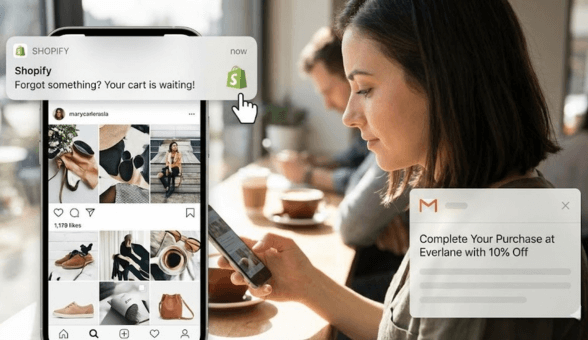
Imagine this scenario. A customer spends fifteen minutes browsing your online store. She picks out three products she genuinely wants, adds them to her cart, clicks checkout, and then… disappears. No purchase. No payment. No order confirmation. Just an abandoned cart sitting in your system, representing revenue that almost happened but did not.
If this sounds familiar, you are far from alone. Cart abandonment is the single biggest leak in the e-commerce revenue funnel. Across industries, roughly 70 out of every 100 shoppers who add items to their cart will leave without completing the purchase. For Indian online stores, particularly in price-sensitive categories like grocery, fashion, and electronics, the number can be even higher.
The good news? A large portion of these abandoned carts are recoverable. Most shoppers do not abandon because they stopped wanting the product. They abandon because something in the buying experience created friction, doubt, or inconvenience at the wrong moment. Fix those friction points and you unlock revenue that is already sitting right there, waiting to convert.
This guide breaks down exactly why customers abandon carts, how to prevent it from happening in the first place, and what recovery tactics actually work. Every strategy here is designed for Indian small businesses using platforms like Boomimart that give you built-in tools to tackle abandonment without needing a team of developers.
Understanding Why Customers Abandon Their Carts
Before you can fix cart abandonment, you need to understand what causes it. The reasons are surprisingly consistent across industries and geographies. Here is a breakdown of the most common culprits, roughly ordered by how many shoppers they affect:
| Reason for Abandonment | % of Shoppers Affected (Approx.) | Impact Level | Fixability |
| Unexpected shipping charges or fees | 45% to 55% | Very High | Easy to fix |
| Forced account creation before checkout | 25% to 35% | High | Easy to fix |
| Long or complicated checkout process | 20% to 30% | High | Moderate effort |
| Concerns about payment security | 15% to 25% | High | Moderate effort |
| Slow website or app loading speed | 15% to 20% | Medium-High | Technical effort |
| No preferred payment method available | 10% to 15% | Medium | Easy to fix |
| Unclear return or refund policy | 10% to 15% | Medium | Easy to fix |
| Just browsing or comparing prices | 30% to 40% | Medium | Hard to fix directly |
| Delivery time too long | 10% to 20% | Medium | Logistics dependent |
| Website errors or crashes at checkout | 5% to 10% | High | Technical effort |
Notice something important: the top reasons are not about the product. The customer already decided she wants what you are selling. The failure happens in the buying process itself. That means the solutions are within your control, and most of them are straightforward to implement.
Prevention First: Designing a Checkout That Does Not Lose Customers
The most effective way to deal with cart abandonment is to prevent it from happening. That starts with your checkout flow. Think of your checkout page as the final five metres of a hundred-metre sprint. Your customer has done all the work of finding your store, browsing products, and selecting what she wants. Your checkout needs to carry her across the finish line without tripping her up.
Here is what an optimized checkout looks like compared to what typically causes shoppers to bail:
| Checkout Element | What Hurts Conversion | What Boosts Conversion | Boomimart Feature |
| Number of steps | 5+ page checkout process | Single page or 2-step checkout | Streamlined checkout flow |
| Guest checkout | Mandatory registration | Allow guest checkout with optional signup | Guest checkout enabled by default |
| Payment options | Only card payments | UPI + cards + COD + wallets + net banking | All Indian gateways pre-integrated |
| Delivery information | Vague ‘ships in 5-7 days’ | Clear delivery date with time slot options | Delivery zone and slot management |
| Trust signals | No security badges or reviews | SSL badge, payment icons, review count visible | Built-in review module and secure checkout |
| Mobile experience | Desktop-designed checkout on mobile | Thumb-friendly buttons, autofill support | Mobile-first responsive design |
| Price transparency | Surprise charges at final step | All costs shown upfront (delivery, tax, discount) | Transparent pricing with GST breakup |
If your current checkout is costing you sales, our comprehensive guide on mastering e-commerce checkout design walks you through every element in detail, from form field optimization to payment button placement. Boomimart’s checkout is already designed with these principles baked in, giving you a head start from day one.
Losing Sales at Checkout? Let Us Show You a Better Way!
The Payment Problem: Why Indian Shoppers Need More Options
Payment is where a significant chunk of Indian cart abandonment happens. The reason is simple: Indian consumers have wildly different payment preferences depending on their age, location, tech comfort level, and the value of their purchase. A college student in Bangalore pays for everything via UPI. A homemaker in a Tier 3 town might insist on cash on delivery. A corporate professional buying premium products prefers credit card EMI.
If your store only supports one or two payment methods, you are automatically excluding a large segment of willing buyers. Your checkout should support:
- UPI (Google Pay, PhonePe, Paytm) for the majority of everyday transactions
- Debit and credit cards for mid-to-high value purchases
- Net banking for customers who prefer direct bank transfers
- Cash on delivery for first-time online buyers and trust-sensitive customers
- Wallets and EMI options for big-ticket items where splitting the payment makes the purchase feel easier
Boomimart comes pre-integrated with all major Indian payment gateways including Razorpay, PayU, and others, so you can offer every payment method your customers expect without any additional setup. For a detailed comparison of gateway options, read our guide on top Indian payment gateway providers.
And if COD orders are creating cash flow challenges, our article on enhancing prepaid orders and reducing COD complexity offers proven strategies to shift more customers towards prepaid methods without losing them.
Recovery Tactics That Bring Abandoned Carts Back to Life
Even with a perfectly optimized checkout, some cart abandonment is inevitable. People get distracted. Their phone battery dies mid-checkout. They want to compare prices on another site. Life happens. The key is having a system that automatically follows up with these shoppers and gives them an easy path back to completing their purchase.
Here is a breakdown of the most effective recovery tactics, ranked by timing and expected impact:
| Recovery Tactic | Best Timing | Expected Recovery Rate | How Boomimart Helps |
| Abandoned cart email (1st reminder) | 30 min to 1 hour after abandonment | 8% to 12% | Automated abandoned cart tracking in admin panel |
| WhatsApp follow-up message | 1 to 2 hours after abandonment | 12% to 18% | Native WhatsApp integration sends automated nudges |
| Second email with incentive (discount/free delivery) | 24 hours after abandonment | 5% to 8% | Coupon module creates targeted discount codes |
| SMS reminder with direct cart link | 6 to 12 hours after abandonment | 3% to 6% | Order tracking and notification system |
| Retargeting ads (Facebook/Instagram) | 1 to 3 days after abandonment | 2% to 5% | Data layer tracking captures audience segments |
| Exit-intent popup with offer | At the moment of leaving | 5% to 10% | Customizable storefront with popup capability |
How to Set Up an Effective Recovery Sequence
The most successful recovery approach is a multi-touch sequence that starts gentle and adds urgency over time. Here is a practical framework:
- Within 1 hour: WhatsApp or SMS nudge. Keep it simple and helpful, not salesy. Something like: ‘Hi [Name], you left some items in your cart at [Store Name]. Your cart is saved and ready when you are. [Link to cart]’. WhatsApp messages consistently outperform email in India because of higher open rates and the personal feel of the channel.
- At 24 hours: Follow-up with a small incentive. If the first nudge did not work, send a second message with a reason to act now. This could be a 5% to 10% discount code, free delivery on this order, or a reminder that the items are selling fast and stock is limited. The incentive does not need to be large. It just needs to tip the balance for a customer who was already 90% convinced.
- At 48 to 72 hours: Final reminder with urgency. A last message that creates gentle urgency. ‘Your cart items are about to go out of stock’ or ‘This discount code expires tonight.’ After three touchpoints, if the customer has not returned, it is best to let it go rather than risk annoying them.
Boomimart’s admin panel includes an abandoned cart tracking module that shows you exactly which customers abandoned, what they left behind, and when. Combined with native WhatsApp integration, you can execute this entire recovery sequence with minimal manual effort.
Losing Sales at Checkout? Let Us Show You a Better Way!
Pricing Transparency: The Silent Conversion Killer
One of the fastest ways to destroy checkout conversion is to surprise customers with hidden costs. When a shopper adds a Rs 500 product to her cart and then sees Rs 80 in delivery charges, Rs 90 in GST, and a Rs 20 ‘handling fee’ appear at checkout, the total suddenly feels very different from what she expected. That moment of sticker shock is enough to make her close the tab.
The fix is straightforward: show all costs as early as possible in the shopping journey.
- Display delivery charges on the product page itself or at least in the cart view, not just at the final checkout step.
- Show GST-inclusive pricing wherever possible. Indian consumers prefer to see the final price, not a pre-tax amount with asterisks.
- If you offer free delivery above a threshold, display a progress bar (‘Add Rs 150 more for free delivery’) to incentivize higher cart values rather than surprising customers with charges.
- Avoid any fees that feel arbitrary. Packaging fees, convenience charges, and platform fees frustrate customers and erode trust.
Building Trust at the Checkout Moment
Trust is especially critical for new customers who are buying from your store for the first time. They do not yet know if your products are genuine, if your delivery is reliable, or if they can get a refund if something goes wrong. At the checkout page, every signal that reinforces trust increases the likelihood of conversion.
Here are the trust elements that matter most:
- Visible security badges. Display your SSL certificate, payment gateway logos (Razorpay, PhonePe, etc.), and any industry certifications prominently on the checkout page.
- Clear return and refund policy. Link to your return policy right on the checkout page. A simple ‘Easy 7-day returns’ message can eliminate the fear of being stuck with a product they do not want.
- Customer reviews and ratings. Show product review counts and star ratings on the checkout summary. Social proof at the moment of purchase is incredibly powerful.
- Contact information. A visible phone number or WhatsApp chat icon on the checkout page reassures customers that real people are behind the store and available if anything goes wrong.
For more on how to leverage customer reviews strategically throughout your store, and how Boomimart’s built-in review module makes this easy, read our homepage optimization tips for e-commerce businesses.
Mobile Optimization: Where Most Indian Carts Are Abandoned
Here is a statistic that should shape every decision you make about your checkout: over 75% of e-commerce traffic in India comes from mobile devices. And mobile shoppers have far less patience for clunky experiences than desktop users. A checkout form that is mildly annoying on a laptop becomes genuinely painful on a 5-inch phone screen.
To reduce mobile cart abandonment:
- Use large, thumb-friendly buttons. The ‘Place Order’ button should be impossible to miss and easy to tap.
- Minimize typing. Use autofill, pin code-based city/state selection, and saved addresses wherever possible.
- Optimize page load speed. Every extra second of load time increases abandonment. Compress images, minimize scripts, and use a platform with fast mobile performance.
- Consider offering a dedicated mobile app. App users consistently show lower abandonment rates and higher order values than mobile web users because the experience is smoother and faster.
Boomimart provides both a responsive web store and dedicated customer mobile apps for Android and iOS. Customers who download your branded app get a faster, more reliable shopping experience, and you get a direct channel for push notifications and re-engagement. Learn more about how the future of online shopping is being shaped by mobile-first experiences.
Using Data to Pinpoint and Fix Your Specific Abandonment Issues
Generic advice only takes you so far. The real breakthroughs come when you identify exactly where and why customers are dropping off in your specific store. This requires setting up proper analytics and tracking.
The events you should be capturing include:
- Product page views: Which products are getting attention but not being added to cart? This might indicate pricing concerns or poor product descriptions.
- Add-to-cart events: What percentage of product viewers actually add items? Low rates suggest the product page needs work.
- Cart page views: Are customers opening their cart and then leaving? This often points to delivery charge surprises or minimum order value barriers.
- Checkout initiation: How many cart viewers start the checkout process? A big drop here suggests the checkout itself is intimidating or requires too much information.
- Payment step drop-offs: Are customers getting all the way to payment and then leaving? This screams payment method issues or security concerns.
- Purchase completion: The final conversion. Compare this to checkout initiation to measure your checkout efficiency.
Our comprehensive guide on data layer tracking mastery for e-commerce explains exactly how to set up tracking for every one of these events. And once you have the data flowing, Boomimart’s admin panel gives you dashboards that make sense of it all without needing a data analyst.
Quick Win Checklist: 10 Things You Can Fix This Week
If you want to start reducing cart abandonment right away, here are ten changes you can implement within a few days:
- Enable guest checkout so first-time visitors do not need to create an account.
- Add UPI as a payment option if it is not already available.
- Display delivery charges on the product page or cart page, not just at final checkout.
- Add a ‘Free delivery above Rs X’ bar visible on every page to encourage larger orders.
- Place trust badges (SSL, payment gateway logos, FSSAI if applicable) on the checkout page.
- Link to your return and refund policy from the checkout summary.
- Set up an automated WhatsApp message for abandoned carts (within 1 hour).
- Create a single-use discount code for second-touch recovery emails (sent at 24 hours).
- Test your checkout flow on three different smartphones to catch mobile usability issues.
- Review your last 50 abandoned carts in Boomimart’s admin panel to spot patterns in which products or price points get abandoned most.
Turning Lost Carts Into Your Growth Engine
Cart abandonment is not a problem you solve once and forget. It is an ongoing optimization opportunity that compounds over time. Every percentage point you recover translates directly into additional revenue without spending a single rupee on acquiring new traffic. You are simply converting the visitors you have already attracted.
With Boomimart, you get the tools to tackle abandonment from every angle: a clean, mobile-optimized checkout flow, all Indian payment gateways pre-integrated, abandoned cart tracking in your admin dashboard, native WhatsApp integration for recovery messages, discount and coupon modules for targeted incentives, and the data layer tracking to understand exactly where your funnel needs attention.
Request a free demo to see how Boomimart can help you stop losing sales and start recovering revenue from the carts your customers leave behind.