Return and Refund Policy Best Practices for Indian E-commerce


Returns are not a failure of your business. They are one of the most powerful trust signals you can offer to online shoppers. In a country where 65% of first-time online buyers are still hesitant about purchasing from unknown brands, a clear, fair, and customer-friendly return policy is often the difference between a completed purchase and an abandoned cart. Research consistently shows that 67% of Indian online shoppers check the return policy before making a purchase, and stores with transparent return policies see 15% to 25% higher conversion rates than those that hide their policies in fine print.
But returns also cost money. Every returned product means reverse shipping charges, inspection time, repackaging effort, potential product damage, and worst of all, lost revenue from the original sale. For Indian e-commerce sellers, Return to Origin (RTO) rates average 25% to 40% in categories like fashion and accessories, eating into margins that are already thin. The challenge is designing a return policy that builds customer confidence without creating a system that gets abused or bankrupts your business.
This guide covers everything Indian online sellers need to know: category-specific return policies, refund method comparisons, RTO reduction strategies, legal compliance requirements, and how to turn returns from a cost centre into a retention tool. If you run your store on Boomimart, you will see how its order management, GST-compliant credit notes, CRM, and WhatsApp integration streamline the entire returns process.
Return Policy by Product Category: One Size Does Not Fit All
The biggest mistake Indian e-commerce sellers make is applying a single blanket return policy across all products. A 15-day no-questions-asked return policy might be perfectly reasonable for clothing but would be catastrophic for perishable food items. Your return policy should be tailored to each product category based on the nature of the product, customer expectations, industry norms, and your actual cost of processing returns. Here is a comprehensive category-by-category breakdown:
| Product Category | Recommended Return Window | Accepted Return Reasons | Refund Method | Restocking Fee | Special Conditions |
| Fashion and Apparel | 7 to 15 days from delivery | Wrong size, colour mismatch, defective, different from product image | Exchange first, refund to original payment if exchange unavailable | No fee on first return. Rs 50 to Rs 100 on repeat returners. | Tags must be attached. Unworn condition only. Innerwear, swimwear non-returnable for hygiene. |
| Electronics and Gadgets | 7 days for returns, 6 to 12 months warranty for defects | Dead on arrival, missing accessories, wrong product, manufacturing defect | Replacement first (within 7 days), warranty repair for defects, refund only if replacement unavailable | No fee | Original packaging required. Serial number must match. Software issues excluded from returns (warranty covers hardware only). |
| Grocery and Food Products | No returns (perishable). Complaint within 24 to 48 hours of delivery. | Damaged in transit, expired product, wrong item, quality issue with photo proof | Full refund or replacement for valid complaints. Store credit for minor issues. | N/A | Photo proof mandatory for all claims. No returns for taste preference. FSSAI-compliant products only. |
| Beauty and Skincare | 7 to 10 days (unopened only) | Wrong product, damaged packaging, allergic reaction (with medical proof), expired product | Refund for defective/wrong items. Exchange for preference changes (unopened only). | No fee on defective. Rs 50 on preference-based returns. | Opened products non-returnable unless defective. Sealed products only for hygiene. |
| Home Decor and Furniture | 7 days for small items. 48 hours for large furniture (damage inspection). | Damaged in transit, colour/material significantly different from listing, manufacturing defect | Replacement or refund for defects. Return shipping borne by seller for defective items. | 10% to 15% for buyer-remorse returns on non-defective items | Large items: customer must provide photos at delivery. Assembly-related issues excluded. |
| Books and Stationery | 7 days | Damaged, wrong book, printing defect, missing pages | Replacement first. Refund if same item unavailable. | No fee | Highlighting, writing marks, or water damage voids return eligibility. |
| Jewellery | 3 to 7 days (varies by value) | Wrong item, sizing issue (rings), visible defect, hallmark mismatch | Exchange for sizing issues. Refund for defective/wrong items. | No fee on defective. 5% to 10% on buyer-remorse for gold/silver. | BIS hallmark verification on return. Video proof of defect may be required for high-value items. |
| Handmade and Artisan Products | 7 days for quality issues only | Damaged in transit, significantly different from listing, material defect | Refund or store credit for valid complaints. No returns for minor handmade variations. | No fee on genuine defects | Minor variations in colour, size, and texture are inherent to handmade products. Return policy must clearly state this. |
| Digital Products and Software | Non-returnable after download/activation | Technical malfunction preventing use, wrong product delivered | Store credit or replacement for technical issues. No refund after activation. | N/A | License keys cannot be returned after activation. Free trial or demo should be offered before purchase. |
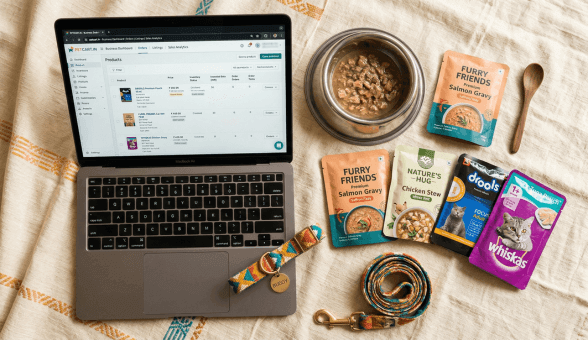
| Pet Products | 7 to 10 days | Wrong item, defective, size mismatch for accessories, expired pet food | Replacement or refund for defective. Exchange for size issues. | No fee | Opened pet food non-returnable unless expired or contaminated. Photo proof for defective items. |
The critical takeaway is that every category needs its own return rules. Display these rules clearly on each product page, not just on a generic policy page buried in your footer. Boomimart allows you to create category-specific return information that appears on product pages, ensuring customers know the exact terms before they buy. For strategies on designing product pages that reduce return-causing misunderstandings, our guide on improving product page design covers the essentials.
Manage Returns Effortlessly. See Boomimart's Order Management!
7 Refund Methods Compared: Speed, Cost, and Retention Impact
How you refund matters as much as whether you refund. The refund method you choose directly impacts your cash flow, customer satisfaction, and whether that customer ever returns to your store. Here is how the major refund options compare:
| Refund Method | Refund Speed | Cost to Seller | Customer Satisfaction | Best Use Case | Retention Impact |
| Refund to Original Payment Method (UPI, Card, Net Banking) | 3 to 7 business days (varies by bank and gateway) | Gateway processing fee lost (2% on original transaction) | Highest. Customer gets money back where they expect it. | Genuine defects, wrong products, damaged items | Low retention. Money leaves your ecosystem entirely. |
| Store Credit or Wallet Balance | Instant | Zero cash outflow. Credit redeemed only on future purchase. | Moderate to High. Acceptable for most return reasons except defective products. | Preference-based returns, size exchanges, minor complaints | Highest retention. Customer must return to spend the credit. |
| Replacement or Exchange | 3 to 7 days (dependent on inventory and shipping) | Product cost + shipping cost for replacement. But retains the original revenue. | High. Customer gets what they wanted without the hassle of re-ordering. | Wrong size, wrong colour, minor defects, COD orders | Very High retention. Customer stays engaged with your brand. |
| Refund via UPI (Direct Transfer) | Instant to 30 minutes | Rs 0 (no MDR on UPI). Most cost-effective refund method. | Very High. Speed builds massive trust. | COD order refunds, small-value refunds, customer goodwill gestures | Moderate retention. Fast resolution creates positive brand memory. |
| Bank Transfer (NEFT/IMPS) | 1 to 3 business days | Rs 2 to Rs 10 per transfer (bank charges) | Moderate. Slower than UPI. Customer needs to provide bank details. | Large-value refunds, B2B refunds, cases where original payment method is unavailable | Low retention. Transactional feel. |
| Coupon Code for Next Purchase | Instant | Zero cash outflow. Slightly better than store credit because it can include bonus value. | Moderate. Feels less valuable than cash refund unless bonus is generous. | Partial compensation for delays, minor quality complaints, goodwill gestures | High retention. Incentivizes return visit with added value. |
| Partial Refund (Keep Product + Discount) | Instant (store credit or coupon) | 10% to 30% of product value (significantly lower than full refund + return shipping) | Moderate to High for minor issues where product is still usable. | Minor cosmetic damage, slightly different shade, missing non-essential accessory | Very High retention. Customer keeps product and gets compensated. |
The smartest strategy is to default to store credit or exchange for preference-based returns (wrong size, changed mind) and reserve full refunds to original payment method for genuine defects, wrong products, and damaged items. This protects your cash flow on discretionary returns while demonstrating full accountability for problems that are your fault. Always refund via UPI when processing COD order refunds, because it is instant, free, and builds enormous trust.
For a detailed guide on optimizing payment processing including refund workflows, our article on Indian payment gateway providers and our checkout design mastery guide cover both sides of the payment experience.
10 Strategies to Reduce RTO and Return Rates
Return to Origin (RTO) is the silent profit killer for Indian e-commerce. Every RTO costs you double shipping (forward + reverse), product handling, potential damage, and lost revenue. In fashion, RTO rates can reach 25% to 40%, meaning a quarter of your shipments come back to you. Here are 10 proven strategies to bring that number down:
| RTO Reduction Strategy | How It Works | Expected RTO Reduction | Implementation Effort | Best For |
| Order Confirmation via WhatsApp Call/Message | After COD order placement, send WhatsApp message or make a quick call to confirm intent. Cancel unconfirmed orders. | 25% to 40% RTO reduction | Low (WhatsApp automation or manual call for high-value) | COD-heavy stores, fashion, electronics |
| Partial Prepaid (Hybrid COD) | Customer pays Rs 100 to Rs 200 online at checkout, remaining on delivery. Skin in the game reduces frivolous orders. | 40% to 60% RTO reduction | Moderate (checkout customization) | Fashion, accessories, any high-RTO category |
| Address Verification via PIN Code Database | Validate delivery address at checkout using PIN code API. Flag unserviceable or suspicious addresses. | 10% to 15% RTO reduction | Low (PIN code validation at checkout) | All e-commerce stores |
| Prepaid Discount Incentive | Offer Rs 30 to Rs 50 off or free shipping for prepaid orders. Nudge COD customers to prepay. | 15% to 25% shift from COD to prepaid (prepaid has near-zero RTO) | Low (discount configuration) | All stores, especially those with COD ratio above 40% |
| Delivery Date Communication | Send WhatsApp message with expected delivery date and tracking link. Manage expectations proactively. | 10% to 20% RTO reduction (fewer ‘not available’ returns) | Low (automated delivery notifications) | All e-commerce stores |
| Photo Proof of Delivery | Delivery partner takes photo at doorstep during handover. Reduces fake ‘not delivered’ claims. | 5% to 10% reduction in false non-delivery claims | Low (delivery partner feature) | High-value orders, areas with delivery disputes |
| COD Order Value Cap | Set maximum order value for COD (e.g., Rs 5,000). High-value orders must be prepaid. | 20% to 30% RTO reduction on high-value orders | Low (checkout configuration) | Electronics, furniture, high-ticket items |
| Repeat Offender Blacklisting | Track customers with 2+ RTOs and restrict them to prepaid-only or block COD for their account. | Eliminates serial RTO offenders | Moderate (CRM tracking + checkout rules) | Stores with identifiable serial returners |
| NDR (Non-Delivery Report) Management | When delivery fails, call customer within 2 hours to reschedule. Proactive follow-up before return-to-origin is triggered. | 30% to 50% of NDR orders converted to successful delivery | Moderate (dedicated follow-up process) | All stores, especially with tier 2/3 delivery |
| Improved Product Descriptions and Sizing | Reduce returns caused by product mismatch: better photos, size charts, fabric details, video demos. | 15% to 25% reduction in ‘product not as expected’ returns | Moderate (content improvement) | Fashion, footwear, home decor, electronics |
The highest-impact combination for most Indian stores is: WhatsApp order confirmation (catches impulse COD orders), prepaid discount incentive (shifts payment mix), and improved product content (reduces legitimate returns). Together, these three strategies can cut your overall return rate by 30% to 50%. For detailed shipping and delivery optimization, our guide on shipping management hacks for Indian SMBs covers the operational side, and our prepaid orders and COD reduction guide addresses payment mix optimization.
Manage Returns Effortlessly. See Boomimart's Order Management!
Building a Smooth Return Process: Step-by-Step Workflow
A poorly managed return process creates twice the frustration: the customer is already disappointed with the product, and now they face a confusing return experience. Here is the ideal return workflow that balances customer convenience with operational efficiency:
- Step 1: Customer initiates return request. Provide a simple return request form on the customer’s order page in their Boomimart account. Fields: order number (auto-filled), product, reason for return (dropdown), photo upload (mandatory for damage/defect claims), preferred resolution (exchange/refund/store credit).
- Step 2: Automated eligibility check. System checks: Is the return within the allowed window for this product category? Is the reason valid per your category-specific policy? Has this customer exceeded return limits? Auto-approve eligible returns. Flag borderline cases for manual review.
- Step 3: Return approval and communication. Send WhatsApp confirmation: ‘Your return request for [product] has been approved. Please keep the product in original condition. Our courier will pick it up within 2 to 3 business days.’ Include return shipping label if applicable.
- Step 4: Reverse pickup scheduling. Schedule reverse pickup through your courier partner (Delhivery, BlueDart, DTDC integrated with Boomimart). Send customer the pickup date and tracking number via WhatsApp.
- Step 5: Product receipt and quality inspection. On receiving the returned product, inspect within 24 hours. Verify: product matches the order, condition matches the return reason, all accessories and tags are present. Document with photos for records.
- Step 6: Process refund or exchange. Approved returns: process refund within 48 hours of inspection. Issue GST credit note automatically via Boomimart. For exchanges, ship replacement immediately. Send WhatsApp update: ‘Your refund of Rs [amount] has been processed and will reflect in your account within 3 to 5 business days.’
- Step 7: Post-return follow-up. 24 hours after refund confirmation, send a brief satisfaction survey. Ask: ‘Was your return experience smooth? Would you shop with us again?’ Customers who have positive return experiences are 40% more likely to repurchase than those who never returned anything, because the trust has been tested and validated.
Turning Returns into a Retention Advantage
Counterintuitively, a customer who has a seamless return experience often becomes more loyal than a customer who never had a problem. The return moment is an emotional inflection point. Handle it badly, and you lose the customer permanently with a negative review as a parting gift. Handle it exceptionally, and you create a story the customer tells friends: ‘They refunded me immediately and even apologized for the inconvenience.’ Here is how to make returns work for your brand:
- Speed is the most powerful trust signal. Process refunds within 48 hours of receiving the return, not 7 to 10 days. Instant store credit or same-day UPI refund makes a customer feel valued and respected. The faster your refund, the faster the negative emotion fades and positive brand perception takes over.
- Offer a ‘keep it’ option for low-value items. If the product costs less than Rs 200 to Rs 300, the return shipping, inspection, and repackaging cost more than the product is worth. Tell the customer: ‘Please keep the product and we have processed a full refund.’ This gesture costs you very little but creates enormous goodwill and word-of-mouth marketing.
- Include a small discount with the refund. When processing a refund, include a Rs 50 to Rs 100 coupon for the next purchase: ‘We are sorry this product did not work out. Here is Rs 100 off your next order as our apology.’ This turns a loss into a retention opportunity.
- Use return data to fix root causes. Track return reasons by product and category. If the same product gets returned repeatedly for the same reason (sizing issue, colour mismatch, fragile packaging), fix the problem at the source: update the product description, add a better size chart, improve packaging, or remove the problematic product from your catalog.
- Showcase your return policy as a marketing asset. ‘Hassle-free returns within 7 days’ is a powerful conversion message. Display it on your homepage banner, product pages, checkout page, and in advertising. The return policy is not fine print to hide. It is a trust badge to promote.
For broader strategies on building customer trust and optimizing the shopping experience, our homepage optimization guide and e-commerce traffic management guide provide complementary frameworks.
Legal Compliance: What Indian Law Requires for Returns and Refunds
Indian e-commerce operates under multiple regulatory frameworks that directly impact your return and refund obligations. Ignorance of these requirements is not a defence. Here is what you need to comply with:
| Legal Requirement | What It Means | Your Obligation | Penalty for Non-Compliance | How Boomimart Helps |
| Consumer Protection Act 2019 (E-commerce Rules) | Sellers must clearly display return, refund, exchange, and grievance redressal policies on their website. | Publish a comprehensive return/refund policy page accessible from product pages, checkout, and footer. Include timelines, conditions, and process. | Penalties up to Rs 10 lakh for unfair trade practices. Consumer forum complaints can result in compensation orders. | Boomimart allows dedicated policy pages linked across the store. |
| Consumer Protection (E-commerce) Rules 2020 | E-commerce entities must ensure no cancellation charges are levied unless similar charges are borne by the platform itself. | Do not charge cancellation fees unless you can demonstrate equivalent costs. Pre-shipment cancellation must be free. | Regulatory action, consumer complaints, potential platform blacklisting by DPIIT. | Boomimart order management supports pre-shipment cancellation at no charge. |
| GST on Returns and Refunds | When a product is returned, the GST collected on that sale must be adjusted via a credit note. | Issue a GST credit note for every returned product. Adjust GST liability in your next filing. Maintain return records for audit. | GST audit discrepancies, penalties, interest on unreconciled amounts. | Boomimart’s GST module auto-generates credit notes on order returns. |
| Refund Timeline Obligation | No specific statutory timeline for refunds, but Consumer Forum benchmarks suggest 7 to 15 days is reasonable. | Process refunds within 7 business days of return receipt. Communicate status to customer at each step. | Consumer forum complaints citing unreasonable delay. Compensation orders for mental harassment. | Boomimart tracks return status and enables timely refund processing. |
| Product-Specific Regulations (FSSAI, BIS, Drugs and Cosmetics Act) | Certain products have mandatory return/recall obligations: expired food, defective electronics, harmful cosmetics. | Accept returns without question for safety-related issues. For recalled products, proactively contact all buyers. | FSSAI fines up to Rs 5 lakh. BIS prosecution. D&C Act penalties for harmful cosmetics. | Boomimart’s batch tracking identifies all buyers of recalled batches for proactive outreach. |
| Data Protection (Digital Personal Data Protection Act 2023) | Customer data collected during returns (photos, addresses, phone numbers) must be handled per DPDP Act. | Use return-related customer data only for processing the return. Do not repurpose for marketing without consent. | Penalties up to Rs 250 crore for significant data breaches or misuse. | Boomimart’s CRM maintains data handling boundaries for customer records. |
The most important compliance action is publishing a comprehensive return, refund, and cancellation policy on your store that is accessible from every product page and the checkout page. This policy should be written in clear, simple language (avoid legal jargon) and include specific timelines, conditions, and the process customers should follow. Boomimart’s CMS allows you to create and prominently link policy pages across your store. For broader compliance guidance, see our existing resources on GST compliance for online sellers and schema markup for e-commerce.
Writing Your Return Policy: What to Include
A well-written return policy answers every question a customer might have before they need to ask. Here are the essential elements your policy must cover:
- Return window: Specify exact number of days from delivery date (not order date). Different windows for different categories if applicable.
- Eligible products: List which products are returnable and which are final sale (innerwear, perishables, digital products, custom/personalized items).
- Condition requirements: Products must be unused, with tags attached, in original packaging. Define what ‘unused’ means for each category.
- Return process: Step-by-step instructions on how to initiate a return (through account page, WhatsApp, email, or phone).
- Refund method and timeline: Specify how refunds are processed (original payment method, store credit, UPI) and the expected timeline (e.g., 5 to 7 business days after return receipt).
- Shipping responsibility: Who pays for return shipping? For defective products, seller should pay. For preference-based returns, customer may pay or split cost.
- Exchange process: If exchanges are available, explain how to request size/colour exchange and the timeline for receiving the replacement.
- Damaged or missing items: Clear process for reporting items damaged in transit or missing from the order. Require photo proof within 24 to 48 hours of delivery.
- Contact information: Provide WhatsApp number, email, and business hours for return-related queries. Response time commitment (e.g., within 12 hours).
- Exceptions: Clearly state exceptions: international orders, sale items, bundled products, and any restocking fees that may apply.
Return Policy Mistakes That Cost Indian Sellers Money
- Making the return process deliberately difficult. Forcing customers through 10 email exchanges, a phone call, and a physical form to process a simple return does not reduce returns. It creates angry customers who leave 1-star reviews and dispute the charge with their bank. Make returns easy but well-documented.
- No return policy at all. Hoping customers will not notice the absence of a return policy backfires spectacularly. It signals untrustworthiness and violates Consumer Protection rules. Even a strict policy is better than no policy.
- Identical policies for all categories. A 30-day return window for perishable food products is absurd. A 3-day window for electronics is unreasonably short. Match your policy to the product category’s reality.
- Delaying refunds beyond 7 business days. Every day of delay erodes trust. Customers who wait 15 to 20 days for a refund rarely return. Process refunds within 48 hours of return receipt. If your gateway takes longer, offer instant store credit as an alternative.
- Not tracking return reasons. If you do not know why products come back, you cannot prevent it. Track every return reason. If ‘wrong size’ accounts for 40% of fashion returns, your size chart needs urgent improvement, not your return policy.
- Absorbing all return costs on COD orders. COD returns are the most expensive: forward shipping + COD collection fee + reverse shipping + refund processing. Implement partial prepaid, COD surcharges, and WhatsApp confirmation to reduce COD RTO before it happens.
A well-designed return policy is not a cost centre. It is a conversion tool, a trust builder, and a retention strategy. The stores that handle returns best are the stores that earn the most repeat business. With Boomimart’s order management, GST credit notes, CRM segmentation, and WhatsApp notifications, you have the complete infrastructure to manage returns professionally and turn every return into an opportunity to strengthen the customer relationship.
Request a free demo and see how Boomimart simplifies return management for your store.