Holi Special: Seasonal Marketing Strategies for Indian E-commerce Festivals

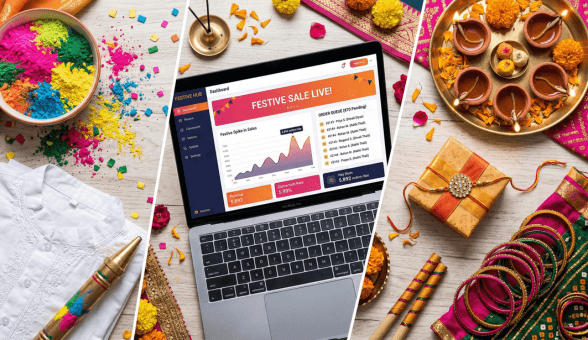
Holi 2026 fell on March 3 and 4 this year, and for Indian e-commerce sellers who were prepared, it represented one of the most commercially productive 72-hour windows of Q1. Industry estimates placed the economic impact of Holi 2026 on Indian trade at over Rs. 65,000 crore, with digital commerce participation surging by 25 percent from tier-2 and tier-3 cities compared to the previous year. Categories that had prepared festival collections, curated gift hampers, and pre-Holi campaigns at least three weeks in advance significantly outperformed those that simply applied a discount code at the last minute.
The lesson from Holi also applies to every major Indian festival in the calendar. Festivals are not just promotional windows. They are emotional moments in which buyers are more willing to spend, more willing to try new brands, and more forgiving of premium pricing when the offer feels curated and relevant. The brands that consistently win on festival days are the ones that treat festival marketing as a strategic discipline, not a reactive campaign.
This guide uses Holi as the primary case study to build a complete framework for Indian festival marketing strategy applicable across the year’s full calendar, from Akshaya Tritiya and Eid to Raksha Bandhan, Navratri, Diwali, and the wedding season. Whether you are running a fashion store, a food brand, a home decor business, or a beauty label on platforms like Boomimart, the principles are the same. The execution differs by category and occasion.
Why Indian Festival Marketing Is Categorically Different from Regular Promotions
Indian festivals create a unique commercial psychology that does not exist during ordinary promotional periods. Understanding what drives it helps you design campaigns that tap genuine buying motivation rather than just adding noise to an already-crowded inbox.
Emotional Spending Permission
Festivals in India carry cultural permission to spend. A buyer who would deliberate for three days over a Rs. 1,500 kurta purchases it within ten minutes when the occasion is Holi and the product is positioned as ‘the perfect white Holi kurta’. The festival provides the justification that removes the hesitation. This is why festival conversion rates consistently outperform everyday promotional conversion rates even when the discount offered is identical or lower.
Gifting as a Primary Purchase Driver
Every major Indian festival has a gifting dimension. Holi brings sweets, colours, and clothes exchanged among friends and families. Raksha Bandhan centres entirely on a gifting ritual. Diwali gifting drives corporate and personal purchase spikes simultaneously. Eid has both personal and community gifting traditions. Understanding the specific gifting occasion within each festival and designing products, bundles, and messaging around that gifting behaviour unlocks revenue streams that everyday selling cannot access.
Urgency Is Pre-Built
Festival dates are fixed in the calendar. Every buyer knows when Holi is. When you run a ‘Holi collection ending March 2’ campaign, the urgency is not manufactured. It is real. The festival happens on a specific date, delivery timelines are visible, and the FOMO of missing the festival without the product is genuine. This built-in urgency means well-designed festival campaigns convert at higher rates than artificial urgency promotions like ‘limited time only’ banners on ordinary days.
| Festival Characteristic | What It Creates for Sellers | Strategic Implication |
| Fixed calendar date | Real deadline-driven urgency | Plan campaigns with delivery SLA as anchor |
| Gifting tradition | Higher average order values | Design gift bundles and hampers first |
| Emotional buying state | Lower price resistance | Invest in visual and emotional storytelling |
| Social sharing culture | Organic reach amplification | Create shareable content tied to products |
| Regional variation | Different products peak by geography | Segment campaigns by city and state |
The Holi Marketing Playbook: A Detailed Case Study
Holi 2026 offered a concentrated lesson in what separates successful festival campaigns from forgettable ones. The brands and stores that drove the highest Holi revenue followed recognisable patterns that are worth examining in detail before applying them to the next festival on your calendar.
The Four-Phase Holi Campaign Structure
Phase 1: Teaser and Awareness (T-14 to T-7, approximately February 17 to 24).
Two weeks before Holi, winning brands began building anticipation with content that celebrated the festival’s spirit rather than promoting specific products. Social posts featuring colour palettes, nostalgia-driven Holi memories, and colour-themed product photography established emotional relevance before any sale messaging appeared. The brands that only began posting on the week of Holi were already behind because the emotional connection had not been built.
Phase 2: Pre-Holi Campaign Ramp (T-6 to T-1, approximately February 26 to March 3).
The week before Holi is peak purchase week. This is when delivery SLAs become a primary marketing message. ‘Order by February 28 for guaranteed Holi delivery’ is not just logistics communication. It is a conversion trigger. Brands that prominently displayed delivery timelines alongside their Holi products throughout this window consistently reported higher add-to-cart rates than those that mentioned delivery terms only in the checkout flow.
Phase 3: Festival Day and Peak (March 3 to 4).
The festival days themselves are not primary purchase days for product e-commerce. Buyers are celebrating, not shopping. Festival day marketing is primarily about brand visibility and social engagement: wish-your-customers posts, user-generated content resharing from buyers who received their Holi orders, and community participation. The commercial peak has already passed. The brand visibility on festival day seeds the next purchase cycle.
Phase 4: Post-Holi Retention and Replenishment (T+3 to T+14, approximately March 7 to 18).
The post-festival window is underutilised by most Indian sellers. After Holi, buyers are dealing with stained clothes, dry skin from synthetic colours, and post-celebration cleanup. Skincare brands that had prepared a ‘post-Holi skin recovery’ campaign targeting this window captured significant secondary revenue. Fashion brands offering ‘stain-resistant or easily washable’ alternatives for after-Holi wear found receptive audiences. The retention phase also serves to capture buyers who missed the pre-Holi window and are looking for post-festival deals.
Set Up Your Festival Campaign on Boomimart
Holi Product Categories That Consistently Performed in 2026
Market data from Holi 2026 revealed clear category performance patterns that are directly useful for planning future festival campaigns.
| Product Category | Holi 2026 Trend | Opportunity for Next Year |
| White cotton kurtas and ethnic wear | Strongest single fashion item in Holi week | Stock and list by Feb 15; bundle with dupatta |
| Herbal and organic gulal (colours) | Strong demand, eco-preference growing | Premium herbal range with gifting packaging |
| Pichkari and water play equipment | Quick commerce dominated, plan early delivery | Pre-book stock, offer fast shipping SKUs |
| Skincare and post-Holi care | Post-Holi skin recovery niche growing fast | Plan post-festival campaign for March 5-18 |
| Holi gift hampers (sweets, colours, accessories) | High AOV, gifting search peaked Feb 20-28 | Create by Feb 1 and list for gifting search |
| Brass and silver pooja items | Holika Dahan rituals drive this category | Target puja accessory buyers 10 days before |
Building the Annual Indian Festival Marketing Calendar
Holi is one event in a year-round festival marketing opportunity. Indian sellers who treat festival marketing as a year-round discipline, rather than a series of reactive campaigns, build a structural advantage that compounds month by month. The complete Indian festival calendar offers at least eight to ten major commercial opportunities annually, and several more regional ones depending on your target geography.
The Complete Indian Festival Sales Calendar for 2026
| Festival | 2026 Date | Peak Purchase Window |
| Holi | March 3-4 | February 17 to March 3 |
| Ugadi / Gudi Padwa | March 19-20 | March 5 to 18 |
| Ram Navami | March 27 | March 15 to 26 |
| Akshaya Tritiya | April 28 | April 8 to 27 |
| Eid al-Adha (Bakrid) | June 7 | May 24 to June 6 |
| Raksha Bandhan | August 19 | August 3 to 18 |
| Janmashtami | August 26 | August 13 to 25 |
| Ganesh Chaturthi | September 13 | August 28 to September 12 |
| Navratri start | October 12 | September 28 to October 11 |
| Dussehra | October 21 | October 7 to 20 |
| Dhanteras | October 28 | October 14 to 27 |
| Diwali | October 29 | October 1 to 28 (extended window) |
| Bhai Dooj | October 31 | October 26 to 30 |
| Chhath Puja | November 3 | October 28 to November 2 |
| Christmas | December 25 | December 5 to 24 |
| New Year | January 1 | December 20 to 31 |
The calendar above shows 17 major commercial windows across the year. A seller who has planned festival-specific collections, landing pages, gift bundles, and promotional timelines for even 8 to 10 of these events is operating with a structural revenue advantage over competitors who react to each festival as it arrives.
Five Core Components of Every Successful Festival Campaign
Across all Indian festivals, the highest-performing campaigns share five structural components. The execution details change by occasion and category, but the architecture is consistent.
1. Festival-Specific Product Collection or Landing Page
Every major festival deserves a dedicated landing page or collection on your store. This serves both conversion and SEO purposes. A buyer searching ‘Holi gift hamper under 500’ should land on a page that shows exactly that, not on your homepage. A buyer searching ‘Diwali diyas online’ should reach your Diwali collection, not navigate through your full catalog.
Festival landing pages should go live at least 3 weeks before the festival date to allow Google time to index and rank them for festival-related searches. A page launched 2 days before Holi will not rank for Holi search queries no matter how well it is optimised. SEO lead time is a real constraint that requires advance planning.
2. Gift Bundle Architecture
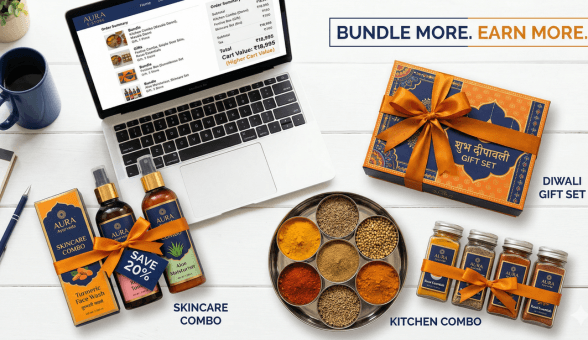
Every festival with a gifting dimension requires pre-built gift bundles. Buyers in gifting mode want the decision made for them. A ‘Holi Gift Hamper’ containing herbal colours, a white cotton tee, and a packet of traditional gujiya takes the buyer from ‘what should I get someone for Holi’ to ‘add to cart’ in one step. The bundle should be priced to feel like a complete gift, packaged in festival-appropriate presentation, and listed with delivery timing clearly stated.
3. WhatsApp Campaign Sequence
WhatsApp is the highest-conversion outreach channel for Indian festival marketing because it reaches buyers in the same space where they are already sharing festival plans with friends and family. A three-message WhatsApp campaign sequence structured as: (i) festival collection launch announcement with link 10 days before; (ii) ‘last day for guaranteed delivery’ urgency reminder 3 to 4 days before; (iii) ‘Happy [Festival]’ greeting on the festival day with a post-festival offer, consistently outperforms email campaigns on open rates and click-through rates for Indian e-commerce audiences.
4. Festival-Themed Visual Identity
Product photography, website banners, WhatsApp images, and social posts should all adopt festival-appropriate visual treatment during the campaign window. For Holi, this means vibrant pinks, yellows, and greens with colour-splash visual motifs. For Diwali, deep reds and golds with diya and rangoli visual elements. For Eid, emerald greens and whites with crescent and star motifs. The visual shift signals to returning visitors that something special is happening, which increases browse time and page engagement even for buyers who were not looking for a festival purchase.
5. Delivery Promise as Marketing Message
The single highest-converting message in Indian festival e-commerce is a clear, specific delivery guarantee: ‘Order by [date] for delivery before [festival name]’. This message removes the purchase risk that holds many festival buyers back. A buyer who is not sure whether an order placed today will arrive before the festival is a buyer who delays the purchase until they are certain, which often means they find an alternative or simply do not buy. Displaying delivery timelines prominently on festival landing pages, on product pages, and in WhatsApp campaigns directly addresses this hesitation.
Set Up Your Festival Campaign on Boomimart
Category-Specific Festival Strategies
The five core components apply universally, but each product category requires different emphasis and different product preparation for festival seasons. Here is how to adapt the framework for the most common Indian e-commerce categories.
Fashion and Apparel
Festival fashion in India is among the most predictable category in the entire e-commerce calendar. White kurtas for Holi, ethnic wear for Navratri and Dussehra, gifting sets for Raksha Bandhan, new clothes for Diwali and Eid, and bridal and wedding wear across the October to February wedding season. The preparation requirement is primarily inventory: ensure festival-relevant styles are stocked at least 4 to 6 weeks before each occasion to allow for pre-festival demand and delivery time.
The ‘Holi white kurta’ category in 2026 saw demand beginning to peak from February 20, with buyers specifically seeking comfortable, loose cotton styles that would not restrict movement during festival celebrations. Sellers who had listed dedicated ‘Holi special’ kurta collections with clear festival positioning captured searches that sellers with generic white kurta listings in a standard catalog simply did not appear for.
Food and Confectionery
Indian festival food gifting is a multi-thousand crore category that most dedicated food e-commerce sellers do not exploit fully. Mithai boxes, dry fruit hampers, traditional sweets from regional origins, and artisanal food gift sets all peak around festivals. The operational complexity of fresh food logistics requires earlier planning than most other categories: festival food orders typically require a 5 to 7 day lead time on preparation and packing, meaning the order window must close several days before the festival date.
Home Decor and Puja Essentials
Diwali drives the single largest home decor purchase spike of the year by a significant margin. Diyas, lanterns, rangoli accessories, decorative cushions, festive table linens, and pooja thali sets all see concentrated demand in the 3 to 4 weeks before Diwali. For Holi, the puja accessory category peaks in the 10 days before Holika Dahan as buyers prepare for the ritual bonfire ceremony. Planning separate festival collections for Diwali home decor and Holi puja items, with distinct landing pages and gift bundles for each, captures high-intent searches that generic home decor listings miss entirely.
Beauty and Personal Care
Festival beauty categories follow a two-phase pattern: pre-festival preparation and post-festival recovery. Before Holi, skincare protection products, oil for hair and skin, and sun protection see elevated demand as buyers prepare for a day outdoors in colour. After Holi, the recovery category, deep cleansing products, colour-removing haircare, and skin-soothing formulations, sustains elevated demand for 7 to 10 days. Before Diwali, gifting beauty sets and premium skincare are peak categories. Before weddings, bridal skincare and hair care routines drive sustained demand across the October to February window.
Electronics and Gadgets
Diwali and Dhanteras are the primary purchase seasons for electronics and gifting technology in India. The cultural tradition of purchasing gold and silver on Dhanteras has extended in urban India to include premium electronics as an expression of the same ‘auspicious purchase’ sentiment. Sellers of headphones, smartwatches, small appliances, and home electronics who position their products as Dhanteras gifting options with appropriate festival landing pages capture a significant premium-gifting audience that general electronics listings do not reach.
Set Up Your Festival Campaign on Boomimart
Limited Edition Products: The Festival Revenue Multiplier
One of the most consistently effective festival revenue strategies for Indian e-commerce brands is the limited edition product launch. A product that exists only during the festival window creates scarcity, urgency, and collectibility that standard catalog products cannot generate.
What Makes a Successful Limited Edition Festival Product
- Authentic festival connection: The product must have a genuine, visible link to the festival. A Holi-themed face pack in gulal colours, a Diwali gift box in a deep red and gold design, a Raksha Bandhan rakhi with a complementary bracelet.
- Genuine scarcity: Limited editions must actually be limited. If buyers discover the ‘limited’ product is still available three festivals later, the scarcity signal is permanently damaged for your brand.
- Premium presentation: Limited edition products justify higher price points through superior packaging. Festival-specific box designs, tissue paper, ribbon, and a hand-signed card elevate the perception of value beyond the product itself.
- Early announcement: Announce the limited edition 2 to 3 weeks before the festival with a ‘limited quantity’ countdown to build desire before the purchase window opens.
In 2026, multiple Indian D2C brands used Holi to launch limited edition product lines that sold out within 48 hours of their campaign launch. The social media amplification of ‘sold out’ announcements generated as much brand awareness as the original launch, and the waitlist collected from buyers who missed the first run converted strongly into regular catalog purchases. Boomimart’s inventory management tools support limited quantity configuration per SKU, allowing you to set hard stock limits on festival editions that automatically show ‘sold out’ when the threshold is reached.
Regional Festival Marketing: The Tier-2 and Tier-3 Opportunity
Holi 2026 saw a 25 percent surge in digital commerce participation from tier-2 and tier-3 cities. This trajectory is consistent across all major Indian festivals. The buyers who are now shopping online from smaller Indian cities are not less commercially active than metro buyers. In many categories, they are more price-motivated but equally quality-conscious, and they are underserved by brands that design festival campaigns exclusively for metro audiences.
Regional Variations That Affect Category Demand
Several major Indian festivals have significant regional variations that create differentiated product demand. Holi is celebrated with distinct regional flavours: Lathmar Holi in Mathura and Vrindavan, Dol Purnima in West Bengal, and more restrained celebrations in South India where the festival is less central to regional culture. Navratri means nine nights of Garba in Gujarat but a different set of traditions in other states. Onam is Kerala’s biggest festival and has no significant commercial equivalent in North India.
Sellers who identify the regional concentration of their buyer base and adapt festival campaigns to regional traditions rather than defaulting to generic pan-India messaging consistently report higher engagement from their target audience. A Gujarat-based ethnic wear seller who creates a dedicated Navratri Garba collection with traditional chaniya choli designs and ships it to buyers across the Gujarati diaspora in Mumbai, Surat, and Ahmedabad is operating with far more precision than a seller running a generic ‘festive wear’ campaign.
| Festival | Primary Regional Markets |
| Holi (Lathmar) | Mathura, Vrindavan, Barsana, Agra |
| Onam | Kerala, Keralite diaspora in Gulf and metro cities |
| Navratri Garba | Gujarat, Rajasthan, Gujarati diaspora nationwide |
| Durga Puja | West Bengal, Assam, Odisha, Bengali diaspora |
| Pongal | Tamil Nadu, Tamil diaspora in metros and Singapore |
| Bihu | Assam, northeast India |
| Baisakhi | Punjab, Haryana, Punjabi diaspora |
Post-Festival: The Clearance and Retention Window
Every festival leaves two commercial opportunities in its immediate aftermath that most sellers underutilise. The first is clearance: festival-specific inventory that was not sold during the peak window. The second is retention: buyers who purchased during the festival and are now primed for a follow-up relationship.
Managing Post-Festival Inventory
Festival inventory that remains unsold after the peak window should not sit at full festival pricing. A 20 to 30 percent post-festival clearance discount communicated within 3 to 5 days of the festival date clears remaining stock while the category is still contextually relevant. Waiting too long to clear inventory, hoping to sell it at full price, typically results in the stock sitting until the following year’s festival, creating a carrying cost and storage burden that erodes the festival’s profitability.
The Post-Festival Customer Retention Campaign
Buyers who purchased from your store during a festival have demonstrated several important things: they trust your store enough to transact, they value what you sell at the price you charge, and they associate your brand with a positive celebration experience. These are your warmest potential repeat buyers and the immediate post-festival window is the best time to convert them into loyal customers.
A WhatsApp or email message sent 5 to 7 days after the festival, thanking them for their purchase and offering a modest incentive on their next order, consistently generates significantly higher conversion rates than equivalent messages sent to cold audiences. Building this post-festival retention step into every campaign plan turns one-time festival buyers into recurring customers. Boomimart’s CRM and customer account features allow you to tag and segment buyers by their last purchase occasion, making post-festival retention campaigns easy to execute as a targeted outreach rather than a broadcast.
Measuring Festival Campaign Performance
Festival campaigns require their own measurement framework because standard monthly analytics blend festival and non-festival periods in ways that obscure what the campaign actually delivered.
Festival-Specific Metrics to Track
- Festival campaign revenue: Total revenue during the campaign window (3 weeks before to 1 week after the festival) compared to the equivalent non-festival period.
- Festival AOV vs everyday AOV: Whether gift bundles and festival collections drove higher per-order values than the store average.
- Landing page conversion rate: What percentage of visitors to your festival landing page added to cart. Below 2 percent suggests the product or pricing is not matching buyer intent.
- WhatsApp campaign click-through rate: What percentage of WhatsApp broadcast recipients clicked through to the store. Below 8 percent suggests the message or timing needs adjustment.
- Post-festival retention rate: What percentage of festival buyers made a second purchase within 60 days. This is the metric that determines whether festival campaigns are building your customer base or simply generating transactional spikes.
| Metric | Healthy Festival Benchmark |
| Festival campaign revenue uplift | 40 to 120% above equivalent non-festival period |
| Festival AOV vs store average AOV | 25 to 50% higher due to gift bundles |
| Festival landing page conversion | 2.5 to 5% for well-matched offers |
| WhatsApp campaign click-through | 10 to 25% for existing customer lists |
| Post-festival 60-day repeat purchase | 15 to 30% of festival buyers |
Frequently Asked Questions
How far in advance should I start planning a festival campaign?
The practical minimum is 6 weeks before a major festival like Diwali or Holi. This allows 2 to 3 weeks for product preparation and photography, 1 week for landing page creation and SEO setup, and 3 to 4 weeks of live campaign time to capture the full pre-festival search and purchase window. Campaigns launched within 2 weeks of the festival date miss the majority of pre-festival search traffic and the organic reach building phase that generates social amplification.
Should I run festival discounts or focus on gift bundles?
Both, but with different purposes. Gift bundles are your primary AOV driver and should anchor every festival campaign. They require no discount to justify value because the curation and presentation do the work. Discounts should be reserved for clearing slow-moving festival inventory in the post-festival window and for acquiring first-time buyers with a welcome offer. Running deep discounts on your best festival products trains buyers to wait for discounts and erodes the brand premium you have built through curation.
How do I handle the inventory risk of festival-specific products?
Start with conservative inventory levels in your first year for any new festival category and use pre-order or waitlist mechanics to validate demand before committing to full stock. A Holi gift hamper sold on pre-order with a 5-day production and delivery timeline carries zero inventory risk while still capturing the sale. As you build multiple years of festival sales data, your inventory planning becomes more accurate. Most sellers find that festival categories have predictable year-on-year growth of 15 to 30 percent once the category is established.
Is it worth running festival campaigns for smaller regional festivals?
Absolutely, particularly if your product range has natural relevance and your customer base has regional concentration. A brand with significant Tamil Nadu buyers should create a Pongal campaign with relevant traditional products. A brand serving Gujarati buyers should invest heavily in Navratri. Regional festivals have significantly lower marketing competition from large national brands, which means your campaign can achieve disproportionate visibility at lower cost than Diwali or Holi campaigns where every major brand is competing simultaneously.
What should my post-Holi campaign look like?
A post-Holi campaign has three components working in parallel. First, a clearance push for remaining Holi inventory at a 20 to 30 percent reduction, communicated within 2 to 3 days of the festival. Second, a ‘post-Holi care’ content and product campaign targeting the skin and hair recovery need that appears consistently in the 7 to 10 days after the festival. Third, a retention offer sent to everyone who purchased during the Holi window, framed as a thank-you with an exclusive code for their next purchase. The combination of clearance, category opportunity, and retention makes the post-festival window commercially valuable rather than a dead period.
How do I compete with large brands during major festivals like Diwali?
The large brands compete on scale: massive ad budgets, celebrity endorsements, and platform-wide promotional positions. Indie and SMB sellers cannot match that reach. What you can match, and often exceed, is specificity and personal touch. A large brand runs a generic ‘Diwali offer’ across 50 categories. You run a deeply considered Diwali gift collection for a specific audience, whether that is eco-conscious buyers, lovers of artisanal craft, buyers gifting for corporate events, or regional buyers who want traditional products from their home state. Specificity in targeting, curation in product selection, and genuine storytelling in brand communication consistently win customer loyalty that broad advertising cannot buy. Boomimart’s product catalog and multi-channel selling tools give you the infrastructure to execute that specificity at scale without enterprise-level complexity.