UPI and Digital Payments: Optimizing Your E-commerce Checkout for India

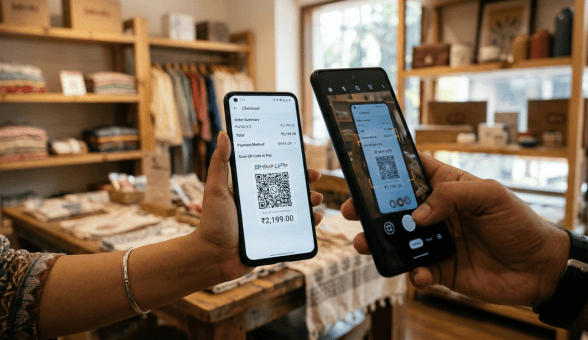
UPI has fundamentally rewritten how India pays. In January 2026, UPI processed over 16 billion transactions, and the number keeps climbing month after month. For Indian e-commerce, the implications are enormous. The customer who once hesitated at checkout because entering a 16-digit card number on a phone was tedious now completes payment with a single tap. The first-time online buyer in a tier 3 town who did not own a credit card now has a frictionless digital payment method linked to their bank account.
Yet a staggering number of Indian online stores still treat UPI as just another payment option buried in a dropdown list between credit cards and net banking. They lose sales every single day because their checkout was designed for a payments landscape that no longer exists. In 2026 India, UPI is not a payment option. It is the payment method. Your entire checkout experience should be engineered around making UPI payments as fast and frictionless as possible, while still supporting every other method customers might prefer.
This guide covers the complete Indian digital payments landscape, shows you exactly how to optimize your checkout for maximum conversion, compares the leading payment gateways, and provides actionable strategies for reducing COD dependence. If you run your store on Boomimart, you will see how its pre-integrated payment infrastructure gives you an optimized checkout out of the box, without hiring a developer or spending weeks on gateway integration.
The Indian Digital Payments Landscape in 2026
Before optimizing your checkout, you need to understand what your customers actually want to pay with. Here is the current state of Indian e-commerce payments:
| Payment Method | Share of Indian E-commerce Payments (2026) | Transaction Limit | Settlement Time | Customer Preference | Merchant Cost (Approx.) |
| UPI (GPay, PhonePe, Paytm, BHIM) | 45% to 50% | Rs 1 lakh per transaction (Rs 5 lakh for some categories) | Instant to T+1 business day | Highest. Preferred across all age groups and tiers. | 0% (MDR waived by govt) to 0.5% via gateways |
| Credit Cards | 12% to 15% | Card limit (varies) | T+2 to T+3 business days | High for premium buyers. EMI option drives high-value purchases. | 1.5% to 2.5% TDR |
| Debit Cards | 8% to 10% | Card limit (varies) | T+2 to T+3 business days | Moderate. Many users prefer UPI over card entry. | 0.4% to 0.9% TDR |
| Net Banking | 5% to 8% | Bank-specific daily limits | T+2 to T+3 business days | Declining. Redirects and OTPs create friction. | Rs 5 to Rs 15 flat per transaction |
| Wallets (Paytm, Amazon Pay, MobiKwik) | 5% to 7% | Rs 10,000 to Rs 1 lakh (KYC-dependent) | Instant to T+1 | Niche. Strong in micro-transactions and specific platforms. | 1% to 2% |
| Cash on Delivery (COD) | 18% to 22% | Unlimited (practically Rs 50,000 cap by most sellers) | After delivery + 5 to 10 business days | Very high in tier 2/3. Trust driver for first-time buyers. | Rs 30 to Rs 80 per order (collection + remittance fees) |
| Buy Now Pay Later (BNPL) | 3% to 5% | Rs 5,000 to Rs 1 lakh (credit-limit dependent) | Instant (BNPL provider pays merchant) | Growing fast among 18 to 35 age group. | 1.5% to 3% |
| EMI (Card EMI, Bajaj EMI, No-Cost EMI) | 4% to 6% | Minimum Rs 3,000 to Rs 5,000 | Instant approval, T+2 settlement | Critical for high-ticket items (electronics, furniture, appliances). | 2% to 4% (seller-subvented for no-cost EMI) |
| UPI AutoPay (Recurring) | 1% to 2% (growing rapidly) | Rs 1 lakh per mandate (Rs 15,000 auto-debit without notification) | Instant on scheduled date | Essential for subscription models. | 0% to 0.5% |
The shift is unmistakable. UPI now accounts for nearly half of all e-commerce payments in India, and its share is growing at the expense of cards and net banking. COD remains significant (especially outside metro cities) but is declining steadily as UPI builds trust among first-time digital buyers. Smart e-commerce businesses are not fighting this trend. They are optimizing their entire checkout around it.
For a comprehensive overview of how Indian payment gateways work and which ones suit different business models, our detailed guide on top Indian payment gateway providers covers the full landscape.
Payment Gateway Comparison: Choosing the Right Partner
Your payment gateway is the invisible engine behind every successful transaction. The wrong choice means higher costs, slower settlements, more failed transactions, and a clunky checkout experience. Here is how the major Indian payment gateways compare:
| Payment Gateway | UPI Support | Setup Fee | Transaction Fee (Domestic) | Settlement Period | Best Feature | Best For |
| Razorpay | Full (Collect, Intent, QR, AutoPay, Turbo UPI) | Free | 2% per transaction | T+2 (instant with RazorpayX) | Turbo UPI (in-app checkout without redirect) | Most Indian e-commerce stores |
| PayU (India) | Full (Collect, Intent, QR) | Free | 1.95% to 2.25% | T+2 to T+3 | Bolt checkout (2-click checkout experience) | High-volume stores wanting lower rates |
| Cashfree Payments | Full (Collect, Intent, AutoPay) | Free | 1.90% to 2.10% | T+1 to T+2 | Fastest settlements, payouts API | Marketplace and multi-vendor payouts |
| Instamojo | Basic (Collect link, QR) | Free | 2% + Rs 3 per transaction | T+3 to T+5 | Simplest setup, no coding needed | Solo entrepreneurs and home businesses |
| CCAvenue | Full (all UPI modes) | Rs 1,200 one-time | 1.99% to 3% | T+3 to T+5 | 200+ payment options, multi-currency | Businesses with international customers |
| PhonePe PG (for merchants) | Full (native PhonePe + all UPI apps) | Free | 0% UPI (govt subsidy) + standard for cards | T+1 to T+2 | Deepest UPI integration with 50 crore+ user base | UPI-first stores maximizing prepaid orders |
| Juspay (HyperSDK) | Full (unified SDK for all UPI apps) | Custom pricing | Custom (volume-based) | T+1 to T+2 | Single SDK integrating all payment methods, tokenized cards | Tech-savvy businesses wanting white-label checkout |
| Boomimart Built-in Payments | Pre-integrated (Razorpay, PayU, COD, UPI) | Included in plan | Gateway rates apply | Per gateway policy | Zero-integration setup, pre-configured for Indian market | Boomimart store owners (plug-and-play) |
For most Indian e-commerce stores, Razorpay or PayU provides the best combination of features, pricing, and reliability. Cashfree is excellent if fast settlement is a priority. If you are running your store on Boomimart, Razorpay and PayU come pre-integrated, meaning you can activate payments in minutes by entering your gateway credentials in the admin panel. No development work, no API integration, no testing cycles. For a head-to-head comparison of how Boomimart’s integrated approach compares to building your own payment stack on platforms like Shopify or WooCommerce, our comparison guides break it down.
Payments Sorted. Store Ready. Get Your Boomimart Demo Today!
10 Checkout Friction Points That Kill Conversions (and How to Fix Them)
Indian e-commerce checkout abandonment averages 70% to 80%. That is 7 to 8 out of every 10 customers who wanted to buy walking away at the final step. Most of this abandonment is caused by avoidable friction. Here are the 10 biggest conversion killers and their fixes:
| Checkout Friction Point | Drop-off Impact | What Happens | How to Fix It | Boomimart Solution |
| Mandatory account creation before checkout | 25% to 35% abandonment | Customers forced to register before seeing the checkout form | Offer guest checkout. Capture email only. Create account post-purchase. | Guest checkout enabled by default |
| Too many form fields | 15% to 25% abandonment | Asking for unnecessary info: date of birth, gender, company name | Keep fields to: name, phone, email, address, pincode. Nothing else. | Streamlined checkout with minimal fields |
| No UPI option or UPI buried in payment list | 20% to 30% abandonment (mobile) | Customers default payment method is missing or hard to find | Show UPI as the first and most prominent payment option on mobile. | UPI displayed as primary payment method |
| UPI redirect flow instead of intent flow | 10% to 20% additional drop-off | Customer must copy VPA or scan QR instead of one-tap app switch | Use UPI intent flow that opens GPay/PhonePe directly from checkout. | Intent-based UPI flow supported |
| Hidden shipping costs revealed at checkout | 30% to 40% abandonment | Free shipping expectation shattered at the final step | Show shipping cost on product page or cart. Better: offer free shipping threshold. | Configurable shipping display on product pages |
| No COD option | 15% to 25% abandonment (tier 2/3) | Trust-conscious first-time buyers have no fallback option | Always offer COD. Use Rs 20 to Rs 50 COD surcharge to nudge prepaid instead of removing COD. | COD enabled with optional surcharge |
| Payment failure with no retry mechanism | 40% to 60% of failed users leave | UPI timeout or bank decline with no easy way to try again | Auto-retry prompt. Allow switching payment method without re-entering details. | Automatic retry and method-switch at checkout |
| Slow page load at checkout | 7% drop-off per second of delay | Heavy checkout page takes 5+ seconds to load on mobile | Optimize checkout page to load under 2 seconds. Minimize scripts and images. | Lightweight, mobile-optimized checkout |
| No order summary visible during payment | 10% to 15% anxiety-driven abandonment | Customer cannot see what they are paying for while entering payment details | Persistent order summary sidebar (desktop) or collapsible section (mobile). | Order summary visible throughout checkout |
| Missing trust signals | 10% to 20% abandonment | No SSL badge, no payment security logo, no return policy visibility | Display SSL, Razorpay/PayU badge, return policy, and FSSAI/GST numbers at checkout. | Trust badges and security indicators built in |
Each of these friction points is a revenue leak. Fixing even three or four of them can improve your checkout conversion rate by 15% to 30%. Boomimart’s checkout is pre-optimized with solutions for each of these issues, giving you a high-converting payment experience without custom development. For a comprehensive approach to checkout optimization, our guide on mastering e-commerce checkout design covers layout, psychology, and UX best practices.
UPI-First Checkout: How to Maximize UPI Conversions
Since UPI is your customers’ preferred payment method, your checkout should be designed with UPI as the primary flow. Here is how to optimize specifically for UPI conversions:
Use Intent Flow, Not Collect Flow
UPI has two main flows for e-commerce, and most stores are using the wrong one:
- Collect flow (suboptimal): Customer enters their UPI ID (VPA) like username@oksbi, your gateway sends a collect request, customer opens their UPI app to approve. This flow has 3 steps and a 15% to 25% drop-off rate because customers forget their VPA, make typos, or do not see the collect request notification.
- Intent flow (optimal): Customer taps ‘Pay with UPI,’ their phone shows a list of installed UPI apps (GPay, PhonePe, Paytm), they tap their preferred app, enter PIN, done. Two taps and a PIN. This flow has 40% to 60% higher completion rates than collect flow on mobile.
Always configure your payment gateway for UPI intent flow on mobile devices. On desktop, provide a QR code that customers scan with their phone. Razorpay, PayU, and Cashfree all support intent flow. Boomimart’s payment integration uses intent flow by default.
Turbo UPI and Tokenized Payments
The next evolution of UPI checkout is already here. Turbo UPI (pioneered by Razorpay) keeps the entire UPI payment flow within your checkout page without redirecting to an external app. The customer selects their bank, enters their UPI PIN directly in the checkout overlay, and the transaction completes without ever leaving your store. This eliminates the app-switch friction entirely and pushes UPI checkout completion rates above 80%.
Similarly, tokenized card payments (mandated by RBI) replace stored card numbers with secure tokens. Returning customers can pay with their saved tokenized card in a single tap without re-entering card details. Both Turbo UPI and tokenized cards are supported by Razorpay and are part of the natural payment evolution that Boomimart stores benefit from as gateways roll out these features.
Mobile-Specific UPI Optimizations
- Show UPI as the default selected payment method on mobile. Do not default to credit card on a device where 80%+ of users will pay with UPI.
- Display UPI app icons (GPay, PhonePe, Paytm, BHIM) instead of a generic ‘UPI’ label. Recognizable icons reduce hesitation and communicate trust.
- Handle UPI timeouts gracefully. UPI transactions can time out after 5 minutes. If a timeout occurs, show a clear message with a one-tap retry button instead of forcing the customer back to the cart.
- Show real-time transaction status. After the customer enters their UPI PIN, show a live progress indicator (Processing, Verifying with bank, Payment confirmed) rather than a static loading spinner.
Payments Sorted. Store Ready. Get Your Boomimart Demo Today!
Shifting COD to Prepaid: 8 Strategies That Work in India
Cash on Delivery remains essential for Indian e-commerce, especially for building trust with first-time buyers. But COD comes with costs: higher RTO (return to origin) rates, delayed cash flow, collection fees, and reconciliation headaches. The goal is not to eliminate COD but to gradually shift the ratio towards prepaid. Here are 8 proven strategies:
| Strategy to Shift COD to Prepaid | How It Works | Expected Impact | Implementation Difficulty | Works Best For |
| Prepaid discount (Rs 20 to Rs 50 off) | Show a visible discount badge on prepaid payment options at checkout | 10% to 20% COD-to-prepaid shift | Easy (pricing configuration) | All e-commerce categories |
| COD surcharge (Rs 30 to Rs 50 extra) | Add a small handling fee for COD orders displayed transparently | 15% to 25% shift (stronger than discount) | Easy (checkout configuration) | Stores with AOV above Rs 500 |
| Faster delivery for prepaid | Promise 1 to 2 day faster dispatch for prepaid orders | 8% to 15% shift | Moderate (operations alignment) | Fashion, food, gifts (time-sensitive) |
| Free shipping only on prepaid | Shipping free for prepaid, flat Rs 40 to Rs 80 for COD | 20% to 30% shift | Easy (shipping rules) | Stores with free shipping threshold |
| Partial prepaid (hybrid COD) | Customer pays Rs 100 to Rs 200 upfront, rest on delivery | Reduces RTO by 40% to 60%, builds prepaid habit | Moderate (gateway + checkout customization) | High-RTO categories (fashion, electronics) |
| Trust building via WhatsApp confirmation | Send order confirmation + payment link via WhatsApp for COD orders | 5% to 10% convert to prepaid post-order | Easy (WhatsApp integration) | All categories, especially first-time buyers |
| Loyalty points only on prepaid | Double or triple loyalty points for prepaid purchases | 5% to 10% shift among repeat customers | Easy (loyalty program configuration) | Stores with active loyalty programs |
| UPI AutoPay for subscriptions | Set up recurring UPI mandates for repeat orders | Near 100% prepaid for subscription customers | Moderate (UPI AutoPay integration) | Subscription boxes, consumables, groceries |
The most effective approach combines multiple strategies. A Boomimart store running a Rs 30 prepaid discount, free shipping only on prepaid, and WhatsApp confirmation with payment link can shift 25% to 40% of COD orders to prepaid within the first quarter. For a deeper dive into managing the COD-to-prepaid balance, our guide on enhancing prepaid orders and reducing COD complexity provides detailed implementation steps.
Payment Security and Compliance Essentials
Customer trust in your payment process directly impacts conversion. Here is what you need to have in place:
- SSL Certificate (HTTPS): Non-negotiable. Every page on your store, especially checkout, must be served over HTTPS. Browsers now flag HTTP pages as ‘Not Secure,’ which kills conversion instantly. Boomimart provides SSL by default on all stores.
- PCI DSS Compliance: You are not required to be PCI DSS certified yourself if you use a certified payment gateway (Razorpay, PayU, Cashfree are all PCI DSS Level 1 compliant). The gateway handles card data. Your store never touches it. But ensure you never store card numbers, CVVs, or PINs in your own database.
- RBI Tokenization Compliance: Since October 2022, merchants and gateways are prohibited from storing actual card details. All card-on-file transactions must use tokenized cards. Your gateway handles this automatically, but verify that your checkout supports token-based payments for returning customers.
- GST on Payment Gateway Fees: Payment gateway charges attract 18% GST. Factor this into your cost calculations. If your gateway charges 2%, the effective cost is 2.36% (2% + 18% GST on 2%). Boomimart’s GST module handles this accounting automatically. For complete GST guidance, see our GST compliance guide for online sellers.
- Display Trust Badges: Show your payment gateway’s security badge, SSL lock icon, and ‘100% Secure Payments’ text near the payment form. These visual cues reduce anxiety and improve conversion by 5% to 10%.
Tracking Payment Performance: The Metrics That Matter
You cannot optimize what you do not measure. Here are the payment metrics every e-commerce store should track weekly:
- Payment success rate by method. Track UPI success rate separately from card success rate. If UPI success drops below 90%, investigate gateway issues. If card success is below 70%, check for 3DS failure patterns.
- Checkout-to-payment conversion rate. What percentage of customers who reach the checkout page complete payment? Healthy benchmark: 55% to 70%. Below 50% means significant friction.
- Payment method distribution. Track the percentage of revenue from each method (UPI, cards, COD, wallets). Use this to prioritize which methods to promote and optimize.
- Average settlement time. How quickly does money from completed orders reach your bank? Faster settlement improves your cash flow for inventory and operations.
- COD-to-prepaid ratio trend. Track this monthly. A healthy trend shows COD percentage declining by 1% to 3% per month as your prepaid incentives and trust signals take effect.
- Refund processing time. How quickly do refunds reach customers? Slow refunds generate complaints and erode trust. Target under 5 business days for all payment methods.
For a broader analytics approach that connects payment data with your overall store performance, our guide on data layer tracking mastery covers the technical setup, and Boomimart’s admin panel guide shows how to use your dashboard for actionable insights.
Payment Mistakes Indian E-commerce Stores Make
- Offering only one payment gateway. If your sole gateway goes down (even for 30 minutes during a flash sale), you lose every sale during that window. Configure a primary and a backup gateway.
- Hiding COD because of RTO fears. Removing COD loses 15% to 25% of orders, especially from new customers. Instead, use the strategies in our COD-to-prepaid table to gradually shift behaviour while keeping COD available.
- Not testing payment flows on actual devices. A checkout that works on your iPhone may fail on a Redmi running Android 11. Test every payment method on 3 to 4 different devices and screen sizes before going live.
- Ignoring failed transaction recovery. A customer whose UPI payment timed out is not a lost sale. Send an automated WhatsApp message within 15 minutes with a direct payment retry link. This recovers 20% to 30% of failed transactions.
- Not showing order total clearly at the payment step. Hidden taxes, surprise shipping charges, or unclear pricing at the moment of payment destroys trust. Total transparency at every step of checkout is non-negotiable.
- Forgetting to enable EMI for high-ticket products. If you sell products above Rs 5,000, not offering EMI options leaves money on the table. No-cost EMI can increase conversion on high-ticket items by 20% to 40%.
Setting Up Payments on Boomimart: Step-by-Step
- Step 1: Create your payment gateway account. Sign up with Razorpay or PayU. Complete KYC verification (PAN, bank details, business proof). Approval typically takes 1 to 3 business days.
- Step 2: Enter gateway credentials in Boomimart admin. Navigate to Settings and then Payments. Enter your API key, secret key, and merchant ID. Boomimart auto-configures the integration.
- Step 3: Enable your preferred payment methods. Toggle on UPI, Credit Card, Debit Card, Net Banking, Wallets, COD, and EMI as needed. Set UPI as the default payment method for mobile.
- Step 4: Configure COD settings. Set maximum order value for COD. Add COD surcharge if using that strategy. Define COD availability by pincode or delivery zone if needed.
- Step 5: Set up prepaid incentives. Configure prepaid discount (Rs 20 to Rs 50 off or percentage) and free shipping rules for prepaid orders through the Discount Module.
- Step 6: Test every payment method. Place test orders using each payment method. Verify the entire flow: product selection, cart, checkout, payment, confirmation, and order receipt.
- Step 7: Go live and monitor. After successful testing, go live. Monitor payment success rates daily for the first week to catch any issues early.
The entire setup takes less than an hour on Boomimart. No developer, no API coding, no testing environment. Your store gets a fully optimized Indian checkout with UPI, cards, COD, and all major payment methods ready to accept orders.
Request a free demo and see how Boomimart’s payment integration works for your business.